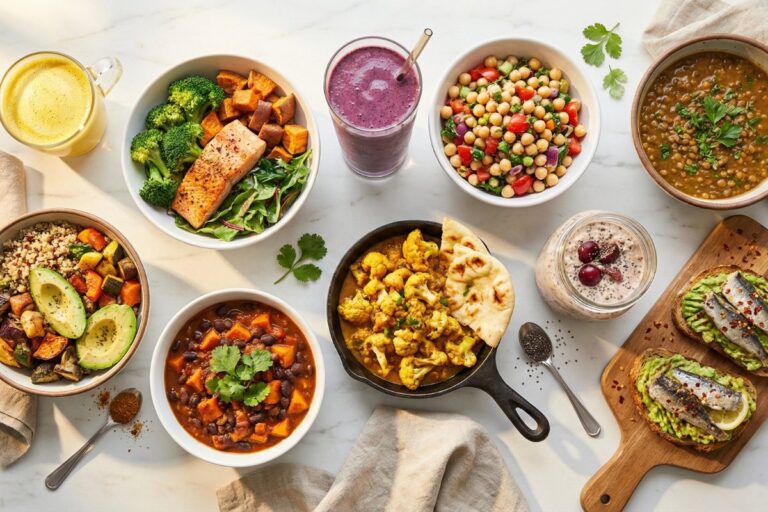
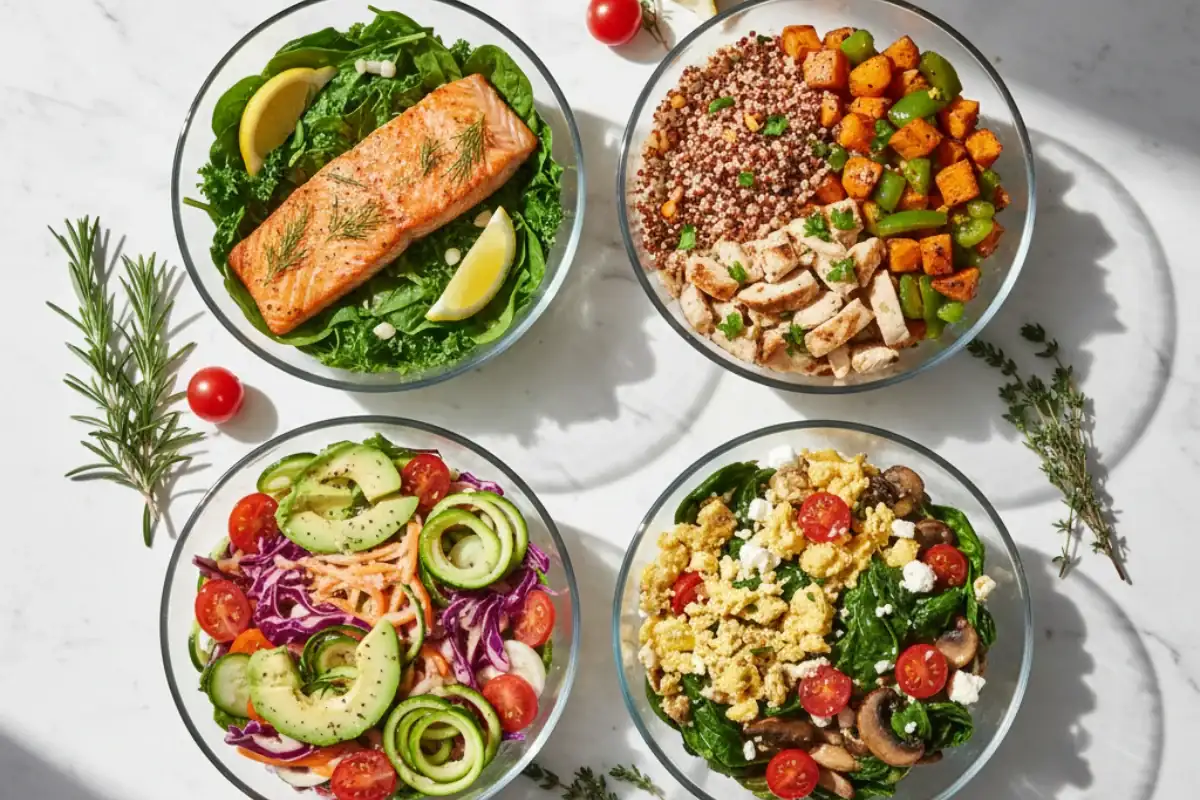
PCOS Friendly Meals – 15 Delicious Recipes That Help
Living with PCOS is hard. Finding meals that actually help is harder.
PCOS friendly meals focus on balancing blood sugar, reducing inflammation, and supporting hormone health. The right food can transform how you feel.
The good news? Eating for PCOS doesn’t mean boring or restrictive. These 15 recipes are delicious, satisfying, and designed to support your health.
According to the Endocrine Society, diet is one of the most effective ways to manage PCOS symptoms naturally. Research from the National Institutes of Health confirms that lifestyle changes, especially diet, should be the first treatment approach for PCOS.
If you’re also working on hormone balance, check out my hormone balancing foods guide for more ideas.
Let’s get cooking.
Quick Facts:
- All recipes: Low glycemic, anti-inflammatory
- Protein per meal: 25-45 grams
- Focus: Blood sugar balance + hormone support
- Diet type: Gluten-free options, dairy-free options included
- Prep time: Most under 30 minutes
What Makes a Meal PCOS Friendly?
Understanding what your body needs is the first step to healing.
PCOS affects how your body processes insulin. When insulin is high, it triggers more androgen production, which causes most PCOS symptoms. The goal of PCOS friendly meals is to keep insulin stable throughout the day.
PCOS friendly meals include:
| Component | Why It Helps | Best Sources |
|---|---|---|
| Protein | Stabilizes blood sugar, keeps you full longer | Salmon, chicken, eggs, legumes |
| Fiber | Slows glucose absorption, feeds good gut bacteria | Vegetables, berries, quinoa, chia seeds |
| Healthy fats | Reduces inflammation, supports hormone production | Avocado, olive oil, nuts, seeds |
| Low glycemic carbs | Prevents insulin spikes and crashes | Sweet potato, quinoa, berries, legumes |
| Anti-inflammatory foods | Reduces chronic inflammation common in PCOS | Turmeric, ginger, fatty fish, leafy greens |
PCOS friendly meals limit or avoid:
| Component | Why It Hurts | What Happens |
|---|---|---|
| Refined sugars | Spikes insulin dramatically | Worsens hormone imbalance |
| White flour/bread | High glycemic, causes crashes | Increases cravings and fatigue |
| Processed foods | Inflammatory, hormone disrupting | Triggers inflammation |
| Excessive dairy | Can worsen symptoms for some women | May increase acne and inflammation |
| Sugary drinks | Major insulin spiker | Rapid blood sugar chaos |
Every recipe below follows these principles carefully.
15 PCOS Friendly Meals
BREAKFAST RECIPES
1. Veggie-Loaded Egg Scramble with Turmeric
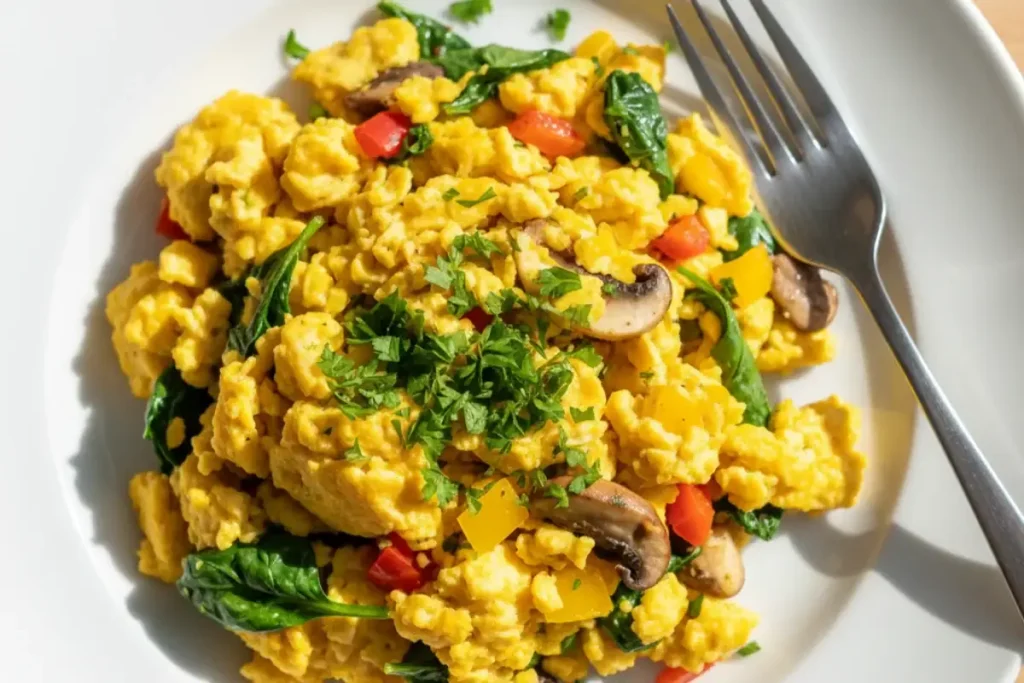
Start your day with protein and vegetables. This scramble stabilizes blood sugar for hours and takes only 10 minutes to make.
Why it’s PCOS friendly: Eggs provide complete protein and choline, which is essential for hormone production. The vegetables add fiber without spiking blood sugar. Turmeric is a powerful anti-inflammatory that helps reduce PCOS-related inflammation.
Protein: 28g | Fiber: 6g | Calories: 320
Ingredients (2 servings):
For the eggs:
- 4 large organic eggs
- 2 egg whites
- ¼ teaspoon turmeric powder
- ¼ teaspoon black pepper (helps absorb turmeric)
- ¼ teaspoon sea salt
For the vegetables:
- 2 cups fresh spinach, roughly chopped
- 1 cup bell peppers (mixed colors), diced small
- ½ cup cremini mushrooms, sliced
- ¼ cup red onion, finely diced
- 2 cloves garlic, minced
For cooking:
- 2 tablespoons extra virgin olive oil
- Fresh herbs for topping (parsley, chives, or basil)
Instructions:
- Prep the vegetables: Wash and chop all vegetables. Keep spinach separate from other vegetables.
- Whisk the eggs: In a medium bowl, whisk together whole eggs, egg whites, turmeric, black pepper, and salt until well combined and slightly frothy.
- Sauté the vegetables: Heat olive oil in a large non-stick skillet over medium heat. Add onion and cook 2 minutes until softened. Add bell peppers and mushrooms. Sauté 3-4 minutes until tender. Add garlic and cook 30 seconds until fragrant.
- Add spinach: Add chopped spinach to the pan. Stir until just wilted, about 1 minute. The spinach will reduce significantly.
- Cook the eggs: Reduce heat to medium-low. Pour egg mixture over vegetables. Let sit 30 seconds until edges begin to set. Gently push eggs from edges toward center, allowing uncooked egg to flow to the pan. Continue this motion until eggs are softly set but still slightly moist, about 3-4 minutes.
- Serve: Remove from heat immediately (eggs continue cooking). Top with fresh herbs.
Storage: Best eaten fresh. Can refrigerate 2 days and reheat gently.
Reheating: Microwave 45-60 seconds on medium power to prevent rubbery texture.
Nutrition per serving: 320 calories | 28g protein | 10g carbs | 20g fat | 6g fiber
My tip: Add turmeric to your eggs regularly – studies show it’s a powerful anti-inflammatory that helps PCOS symptoms. Always add black pepper with turmeric to increase absorption by 2000%.
2. Cinnamon Protein Overnight Oats
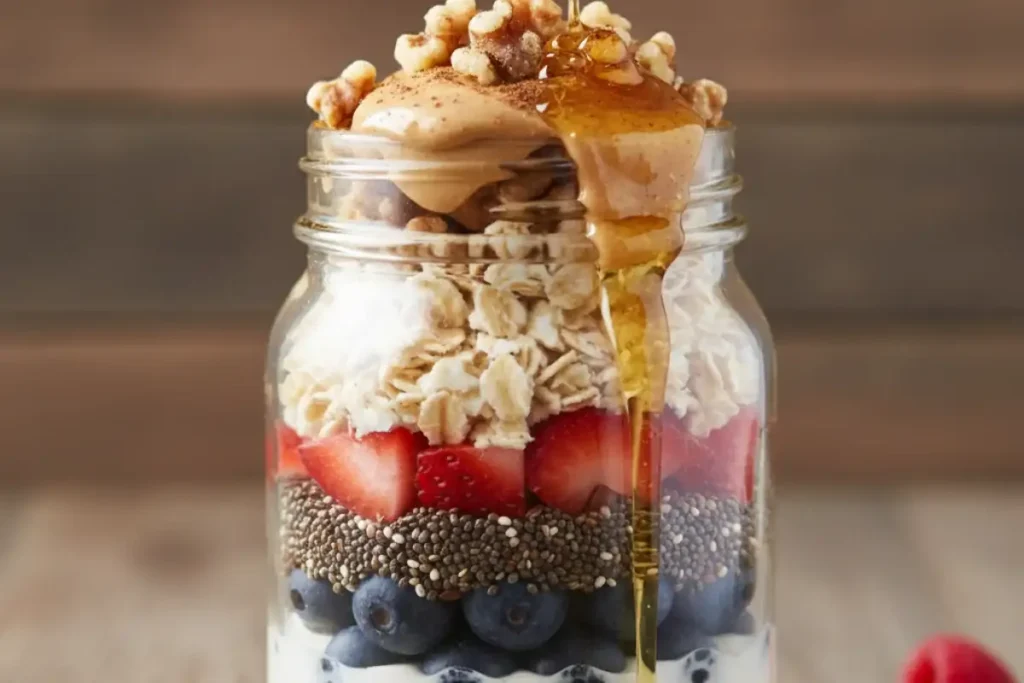
Prep the night before, grab in the morning. These oats are creamy, satisfying, and won’t spike your blood sugar like regular oatmeal.
Why it’s PCOS friendly: Steel-cut oats have a lower glycemic index than instant oats. Cinnamon has been shown in studies to improve insulin sensitivity – perfect for PCOS. The protein powder and healthy fats slow down glucose absorption even more.
Protein: 25g | Fiber: 8g | Calories: 380
Ingredients (2 servings):
For the base:
- 1 cup old-fashioned rolled oats (not instant)
- 1 scoop vanilla protein powder (whey or plant-based)
- 1½ cups unsweetened almond milk
- 2 tablespoons chia seeds
- 1½ teaspoons Ceylon cinnamon
- ½ teaspoon pure vanilla extract
- Pinch of sea salt
For the toppings:
- 2 tablespoons natural almond butter (no sugar added)
- ½ cup fresh mixed berries (blueberries, raspberries, strawberries)
- 2 tablespoons raw walnuts, chopped
- 1 tablespoon ground flaxseed
Instructions:
- Mix the base: In a large mason jar or container, add rolled oats, protein powder, almond milk, chia seeds, cinnamon, vanilla extract, and salt.
- Stir thoroughly: Use a fork or spoon to mix everything very well, making sure there are no clumps of protein powder. The mixture should be loose and liquidy.
- Refrigerate overnight: Cover tightly and refrigerate for at least 6 hours or overnight. The oats will absorb the liquid and become thick and creamy.
- Check consistency in morning: Stir well. If too thick, add 2-3 tablespoons more almond milk until desired consistency.
- Add toppings: Divide between two bowls or jars. Top each with 1 tablespoon almond butter, ¼ cup berries, 1 tablespoon walnuts, and ½ tablespoon flaxseed.
- Serve: Eat cold or microwave 1-2 minutes if you prefer warm oats.
Storage: Base lasts 4 days refrigerated (add toppings fresh daily).
Meal prep tip: Make 4 jars on Sunday for the whole week.
Nutrition per serving: 380 calories | 25g protein | 38g carbs | 16g fat | 8g fiber
My tip: Use Ceylon cinnamon specifically – it’s the “true” cinnamon with more health benefits and less coumarin than regular cassia cinnamon. Studies show ½ teaspoon daily can improve insulin sensitivity in women with PCOS.
For more blood sugar friendly breakfasts, see my blood sugar balancing breakfast recipes.
3. Green Goddess Smoothie Bowl
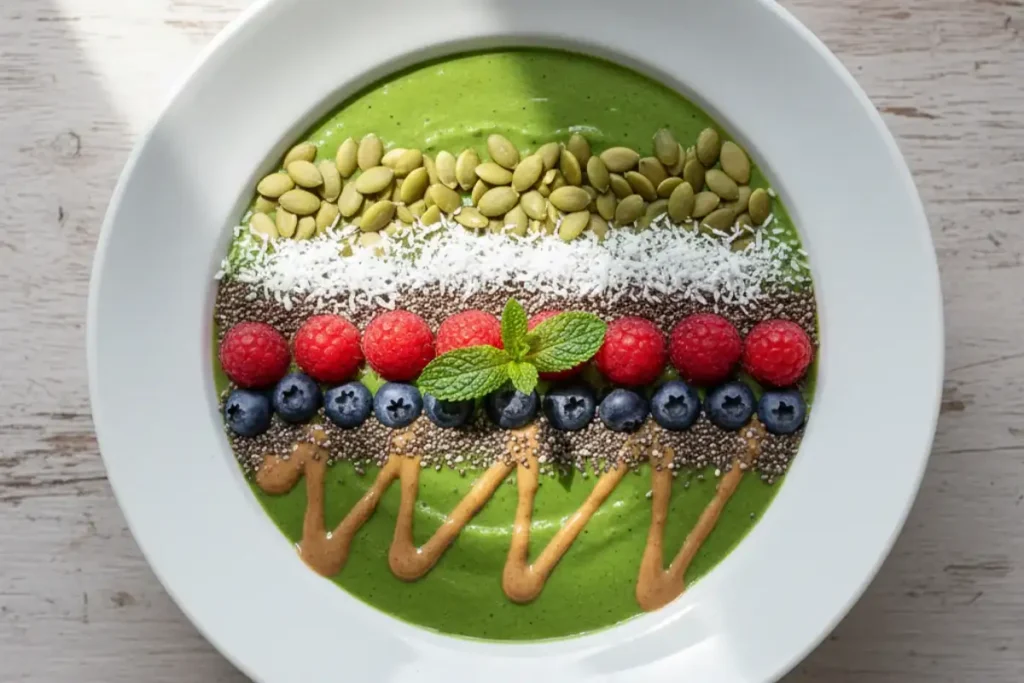
Thick, creamy, and packed with nutrients. This smoothie bowl keeps you full until lunch without any sugar crash.
Why it’s PCOS friendly: Leafy greens are rich in magnesium, which many women with PCOS are deficient in. Avocado provides healthy fats that support hormone production. The protein powder ensures stable energy without blood sugar spikes.
Protein: 30g | Fiber: 10g | Calories: 390
Ingredients (1 serving):
For the smoothie base:
- 1 cup packed fresh spinach
- ½ medium frozen banana (freeze ripe bananas in chunks)
- ½ ripe avocado
- 1 scoop vanilla or unflavored protein powder
- 1 cup unsweetened almond milk
- 1 tablespoon natural almond butter
- 1 tablespoon ground flaxseed
- 4-5 ice cubes
For the toppings:
- 2 tablespoons raw pumpkin seeds (pepitas)
- 2 tablespoons unsweetened coconut flakes
- ¼ cup fresh mixed berries
- 1 teaspoon chia seeds
- Drizzle of almond butter (optional)
Instructions:
- Prep ingredients: Measure all smoothie base ingredients. Make sure banana is frozen (this creates the thick texture).
- Blend in order: Add to blender in this order: almond milk first, then spinach, then remaining ingredients. This helps the blender work more efficiently.
- Blend until thick: Blend on high for 60-90 seconds until completely smooth and very thick. The consistency should be like soft-serve ice cream, not drinkable. Add more ice if too thin.
- Pour into bowl: Transfer to a wide, shallow bowl. Smooth the top with a spoon.
- Arrange toppings: Add toppings in sections for visual appeal – pumpkin seeds on one side, coconut on another, berries in the middle, chia seeds sprinkled throughout.
- Eat immediately: Smoothie bowls are best fresh. Eat with a spoon, not a straw.
Nutrition per serving: 390 calories | 30g protein | 32g carbs | 22g fat | 10g fiber
My tip: Keep the smoothie very thick – it forces you to eat slowly with a spoon, which helps with satiety and gives your body time to register fullness. A thin smoothie you drink quickly won’t keep you as satisfied.
LUNCH RECIPES
4. Mediterranean Salmon Salad with Lemon Dressing
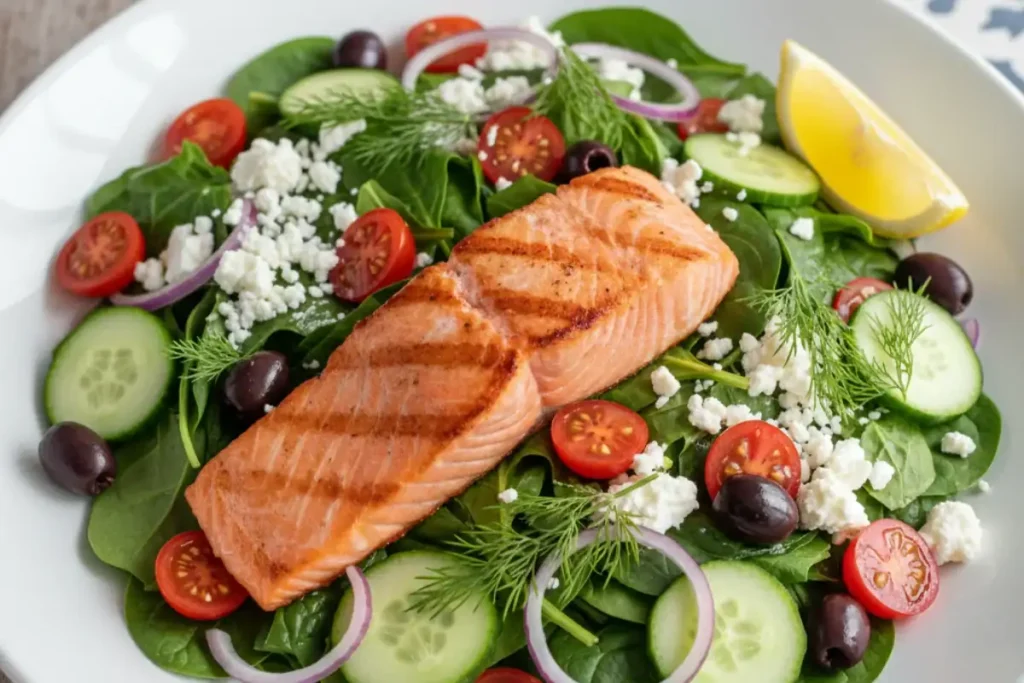
Omega-3 rich salmon on a bed of anti-inflammatory vegetables. This salad is a PCOS powerhouse that tastes like a restaurant meal.
Why it’s PCOS friendly: Salmon’s omega-3 fatty acids (EPA and DHA) are powerful anti-inflammatories that help reduce the chronic inflammation common in PCOS. They also support healthy hormone production. The Mediterranean vegetables are naturally anti-inflammatory and low glycemic.
Protein: 38g | Fiber: 8g | Calories: 450
Ingredients (2 servings):
For the salmon:
- 2 wild-caught salmon fillets (5 oz each)
- 1 tablespoon extra virgin olive oil
- 1 teaspoon dried oregano
- ½ teaspoon garlic powder
- ¼ teaspoon sea salt
- ¼ teaspoon black pepper
- Zest of ½ lemon
For the salad:
- 6 cups mixed greens (arugula, spinach, romaine)
- 1 cup English cucumber, diced
- 1 cup cherry tomatoes, halved
- ½ cup kalamata olives, pitted and halved
- ¼ cup red onion, thinly sliced
- ¼ cup crumbled feta cheese (omit for dairy-free)
- 2 tablespoons fresh dill, chopped
For the lemon dressing:
- 3 tablespoons extra virgin olive oil
- 2 tablespoons fresh lemon juice
- 1 teaspoon Dijon mustard
- 1 small garlic clove, minced
- ¼ teaspoon dried oregano
- Salt and pepper to taste
Instructions:
- Season the salmon: Pat salmon fillets dry with paper towels. Mix olive oil, oregano, garlic powder, salt, pepper, and lemon zest. Rub mixture all over salmon.
- Cook the salmon: Heat a skillet over medium-high heat. Place salmon skin-side up (if skin-on) and cook 4 minutes without moving. Flip carefully and cook another 3-4 minutes until fish flakes easily but is still slightly pink in center. Remove and let rest 3 minutes.
- Make the dressing: While salmon cooks, whisk together olive oil, lemon juice, Dijon mustard, garlic, oregano, salt, and pepper in a small bowl until emulsified.
- Assemble the salad base: Divide mixed greens between two large plates or bowls. Arrange cucumber, tomatoes, olives, and red onion on top.
- Add salmon: Place salmon fillet on each salad (remove skin if desired).
- Finish and serve: Drizzle dressing over salads. Top with crumbled feta and fresh dill.
Storage: Store components separately. Salmon lasts 3 days refrigerated. Dress salad just before eating.
Nutrition per serving: 450 calories | 38g protein | 12g carbs | 28g fat | 8g fiber
My tip: Eat salmon 2-3 times per week for PCOS. The omega-3s are especially important for reducing inflammation and supporting ovulation. Wild-caught salmon has more omega-3s than farmed.
For more anti-inflammatory ideas, check my anti-inflammatory recipes.
5. Chicken and Quinoa Power Bowl with Tahini Dressing
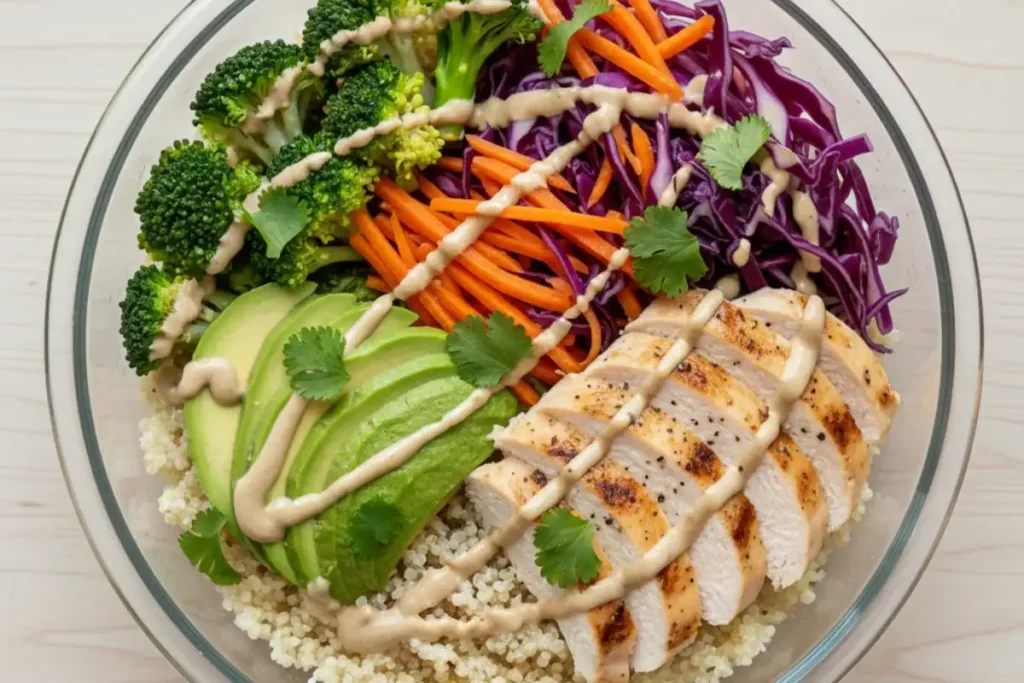
A perfectly balanced bowl with protein, complex carbs, and rainbow vegetables. This meal prep favorite keeps you energized all afternoon.
Why it’s PCOS friendly: Quinoa is a complete protein (contains all 9 essential amino acids) with a low glycemic index. The combination of lean chicken, healthy fats from tahini, and fiber from vegetables creates perfect blood sugar balance.
Protein: 42g | Fiber: 9g | Calories: 480
Ingredients (4 servings):
For the chicken:
- 1.5 lbs boneless, skinless chicken breast
- 2 tablespoons extra virgin olive oil
- 1 teaspoon garlic powder
- 1 teaspoon smoked paprika
- ½ teaspoon cumin
- ½ teaspoon sea salt
- ¼ teaspoon black pepper
For the quinoa:
- 1 cup dry quinoa (makes about 3 cups cooked)
- 2 cups water or low-sodium chicken broth
- ¼ teaspoon salt
For the vegetables:
- 2 cups broccoli florets
- 1 cup shredded purple cabbage
- 1 cup shredded carrots
- 1 cup cherry tomatoes, halved
- 1 ripe avocado, sliced
- 2 tablespoons fresh cilantro, chopped
For the tahini dressing:
- ¼ cup tahini (sesame seed paste)
- 3 tablespoons fresh lemon juice
- 2 tablespoons water (adjust for thickness)
- 1 small garlic clove, minced
- ¼ teaspoon cumin
- Salt to taste
Instructions:
- Cook the quinoa: Rinse quinoa in fine mesh strainer under cold water for 30 seconds (removes bitter coating). Add to pot with water and salt. Bring to boil, reduce heat to low, cover, and simmer 15 minutes. Remove from heat, keep covered 5 minutes, then fluff with fork.
- Season and cook chicken: Pound chicken breasts to even thickness (about ¾ inch). Mix olive oil with garlic powder, paprika, cumin, salt, and pepper. Coat chicken thoroughly. Heat large skillet over medium-high heat. Cook chicken 6-7 minutes per side until internal temperature reaches 165°F. Let rest 5 minutes before slicing.
- Steam the broccoli: While chicken cooks, steam broccoli florets for 4-5 minutes until bright green and tender-crisp. Don’t overcook – it should still have a slight crunch.
- Make the dressing: Whisk tahini, lemon juice, water, garlic, cumin, and salt until smooth and pourable. Add more water if too thick.
- Assemble bowls: Divide quinoa among 4 bowls or meal prep containers. Arrange sliced chicken, broccoli, purple cabbage, carrots, and tomatoes in sections on top of quinoa. Add avocado slices.
- Finish: Drizzle with tahini dressing and garnish with cilantro.
Storage: 5 days refrigerated. Store dressing separately. Add avocado fresh.
Reheating: Microwave 2-3 minutes. Dressing can be added cold.
Nutrition per serving: 480 calories | 42g protein | 35g carbs | 20g fat | 9g fiber
My tip: Make a big batch on Sunday – this bowl is perfect for meal prep. The flavors actually improve as they sit together in the fridge.
6. Asian Turkey Lettuce Wraps
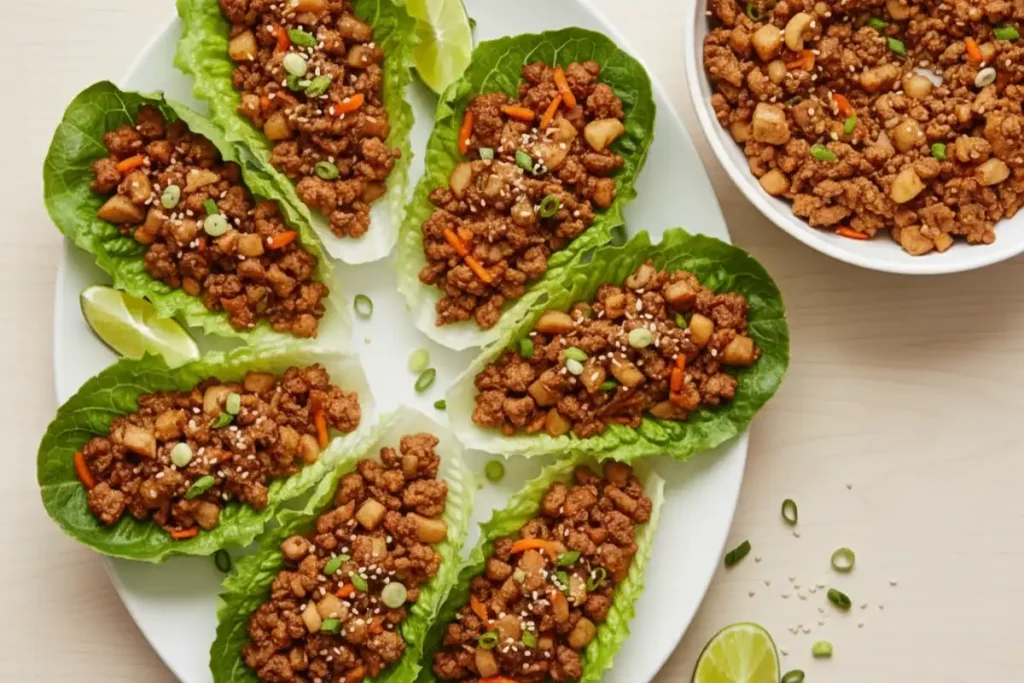
Light, fresh, and incredibly satisfying. These wraps are low carb without feeling restrictive, and the Asian flavors are addictive.
Why it’s PCOS friendly: Lean ground turkey provides clean protein without excess saturated fat. Butter lettuce wraps eliminate refined carbs completely. The ginger and garlic have anti-inflammatory properties that support PCOS management.
Protein: 35g | Fiber: 5g | Calories: 320
Ingredients (4 servings):
For the turkey filling:
- 1.5 lbs 93% lean ground turkey
- 1 cup water chestnuts (canned), drained and finely diced
- ½ cup shredded carrots
- 4 green onions, thinly sliced (white and green parts separated)
- 4 cloves garlic, minced
- 2 tablespoons fresh ginger, finely grated
- 1 tablespoon sesame oil
For the sauce:
- 3 tablespoons coconut aminos (or low-sodium soy sauce)
- 1 tablespoon rice vinegar
- 1 tablespoon sesame oil
- 1 teaspoon fish sauce (optional, adds depth)
- ½ teaspoon red pepper flakes (optional)
For serving:
- 2 heads butter lettuce, leaves separated and washed
- ¼ cup fresh cilantro, chopped
- 2 tablespoons sesame seeds
- Lime wedges
- Sriracha (optional)
Instructions:
- Prep the sauce: Whisk together coconut aminos, rice vinegar, sesame oil, fish sauce (if using), and red pepper flakes. Set aside.
- Cook the aromatics: Heat sesame oil in large skillet or wok over medium-high heat. Add white parts of green onions, garlic, and ginger. Stir-fry 30 seconds until fragrant.
- Brown the turkey: Add ground turkey to pan. Break into small pieces with wooden spoon. Cook 5-6 minutes until no longer pink, continuing to break into small crumbles.
- Add vegetables: Add water chestnuts and carrots. Stir-fry 2 minutes until carrots are slightly softened but still have crunch.
- Add sauce: Pour sauce over turkey mixture. Stir well and cook 2-3 minutes until sauce reduces slightly and coats everything.
- Finish: Remove from heat. Stir in green parts of green onions.
- Serve: Arrange butter lettuce leaves on platter. Spoon turkey filling into center of each leaf. Top with cilantro and sesame seeds. Serve with lime wedges and sriracha on the side.
Storage: Turkey filling lasts 5 days refrigerated. Store lettuce separately. Freezes well 3 months.
Reheating: Microwave filling 2 minutes. Always use fresh lettuce.
Nutrition per serving: 320 calories | 35g protein | 12g carbs | 14g fat | 5g fiber
My tip: Coconut aminos are a PCOS-friendly swap for soy sauce – they’re lower glycemic, slightly sweeter, and contain no soy (which some women with PCOS prefer to avoid).
DINNER RECIPES
7. Herb-Crusted Baked Cod with Roasted Vegetables
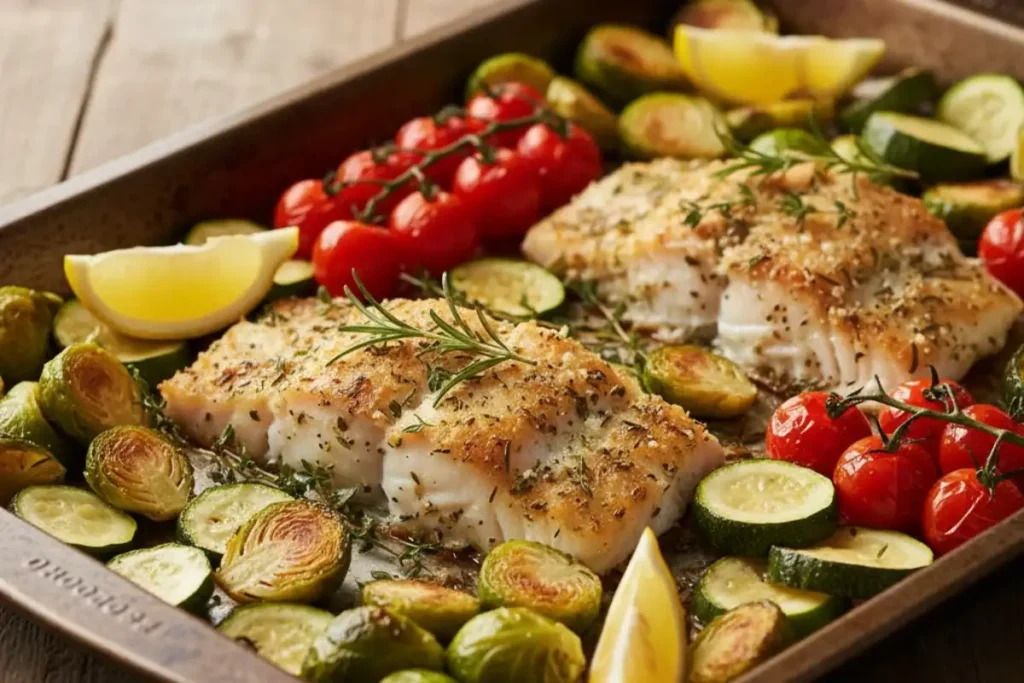
Simple, elegant, and incredibly healthy. This one-pan dinner is perfect for busy weeknights when you want something nourishing without hours of cooking.
Why it’s PCOS friendly: White fish like cod is lean protein that’s easy to digest. Roasted cruciferous vegetables (Brussels sprouts) contain DIM (diindolylmethane), a compound that supports healthy estrogen metabolism – very important for PCOS.
Protein: 35g | Fiber: 7g | Calories: 380
Ingredients (4 servings):
For the vegetables:
- 4 cups Brussels sprouts, trimmed and halved
- 2 cups cherry tomatoes
- 1 cup zucchini, sliced into half-moons
- 3 tablespoons extra virgin olive oil
- 4 cloves garlic, minced
- ½ teaspoon sea salt
- ¼ teaspoon black pepper
For the cod:
- 4 cod fillets (6 oz each)
- 2 tablespoons extra virgin olive oil
- 2 tablespoons fresh parsley, finely chopped
- 2 tablespoons fresh dill, finely chopped
- 1 tablespoon fresh thyme leaves
- Zest of 1 lemon
- 3 cloves garlic, minced
- ½ teaspoon sea salt
- ¼ teaspoon black pepper
For serving:
- Lemon wedges
- Extra fresh herbs
Instructions:
- Preheat oven: Set oven to 400°F (200°C).
- Prep and roast vegetables: Toss Brussels sprouts, cherry tomatoes, and zucchini with olive oil, garlic, salt, and pepper. Spread in single layer on large baking sheet. Roast 15 minutes.
- Make herb topping: While vegetables roast, mix olive oil, parsley, dill, thyme, lemon zest, garlic, salt, and pepper in small bowl to create a paste.
- Prepare the cod: Pat cod fillets dry with paper towels. Press herb mixture evenly onto top of each fillet.
- Add cod to pan: Remove baking sheet from oven. Push vegetables to sides and place herb-topped cod fillets in center of pan.
- Finish cooking: Return to oven and bake 12-15 minutes until cod flakes easily with fork and vegetables are golden and tender.
- Serve: Divide vegetables among plates. Place cod on top. Garnish with lemon wedges and extra fresh herbs.
Nutrition per serving: 380 calories | 35g protein | 18g carbs | 18g fat | 7g fiber
My tip: Brussels sprouts are a PCOS superfood! They contain DIM, which helps your body metabolize estrogen properly. Aim to eat cruciferous vegetables (Brussels sprouts, broccoli, cauliflower, cabbage) daily.
8. Slow Cooker Chicken Tikka Masala (Dairy-Free)
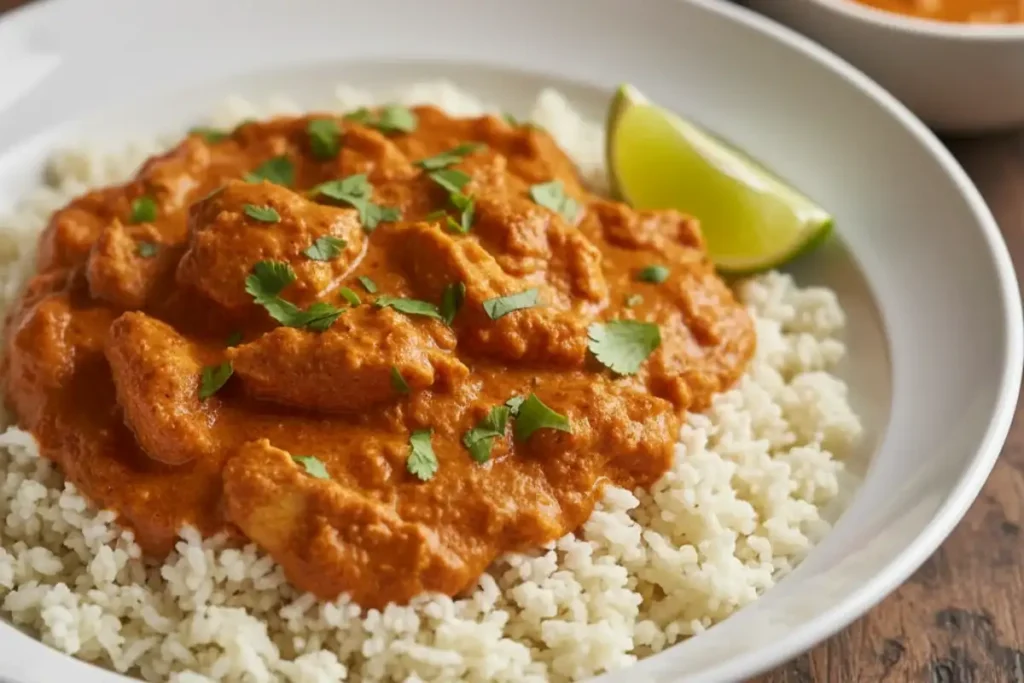
Creamy, warming, and full of anti-inflammatory spices. This healthier version uses coconut milk instead of cream, making it perfect for PCOS.
Why it’s PCOS friendly: Turmeric, ginger, and cumin are powerful anti-inflammatories used in traditional medicine for centuries. Coconut milk provides healthy medium-chain fats without the potential inflammatory effects of dairy. The high protein keeps blood sugar stable.
Protein: 40g | Fiber: 5g | Calories: 420
Ingredients (6 servings):
For the chicken:
- 2 lbs boneless, skinless chicken breast
- 1 teaspoon sea salt
- ½ teaspoon black pepper
For the sauce:
- 1 can (14 oz) full-fat coconut milk
- 1 can (14 oz) crushed tomatoes
- 1 large yellow onion, diced
- 5 cloves garlic, minced
- 2 tablespoons fresh ginger, grated
- 2 tablespoons garam masala
- 1 tablespoon turmeric powder
- 1 tablespoon ground cumin
- 1 teaspoon smoked paprika
- ½ teaspoon cayenne pepper (adjust to taste)
- 1 teaspoon sea salt
For serving:
- 4 cups cauliflower rice
- Fresh cilantro, chopped
- Lime wedges
Instructions:
- Season the chicken: Sprinkle chicken breasts with salt and pepper. Place in bottom of slow cooker in single layer.
- Make the sauce: In a large bowl, mix coconut milk, crushed tomatoes, onion, garlic, ginger, garam masala, turmeric, cumin, paprika, cayenne, and salt until well combined.
- Pour sauce over chicken: Pour mixture over chicken in slow cooker, making sure chicken is covered.
- Cook: Cover and cook on LOW for 6-8 hours or HIGH for 3-4 hours until chicken is tender and fully cooked.
- Shred the chicken: Remove chicken from slow cooker. Use two forks to shred into bite-sized pieces. Return shredded chicken to sauce and stir well.
- Prepare cauliflower rice: During last 10 minutes of cooking, prepare cauliflower rice according to package directions (or microwave fresh riced cauliflower).
- Serve: Spoon chicken tikka masala over cauliflower rice. Garnish generously with fresh cilantro. Serve with lime wedges.
Storage: 5 days refrigerated. Freezes beautifully for 3 months.
Reheating: Microwave 2-3 minutes or reheat on stovetop with splash of water.
Nutrition per serving: 420 calories | 40g protein | 15g carbs | 22g fat | 5g fiber
My tip: Make a double batch and freeze portions in individual containers. Having PCOS friendly meals ready in the freezer makes healthy eating so much easier on busy days.
For more gut-healthy meals, see my gut health breakfast recipes.
9. Lemon Garlic Shrimp with Zucchini Noodles
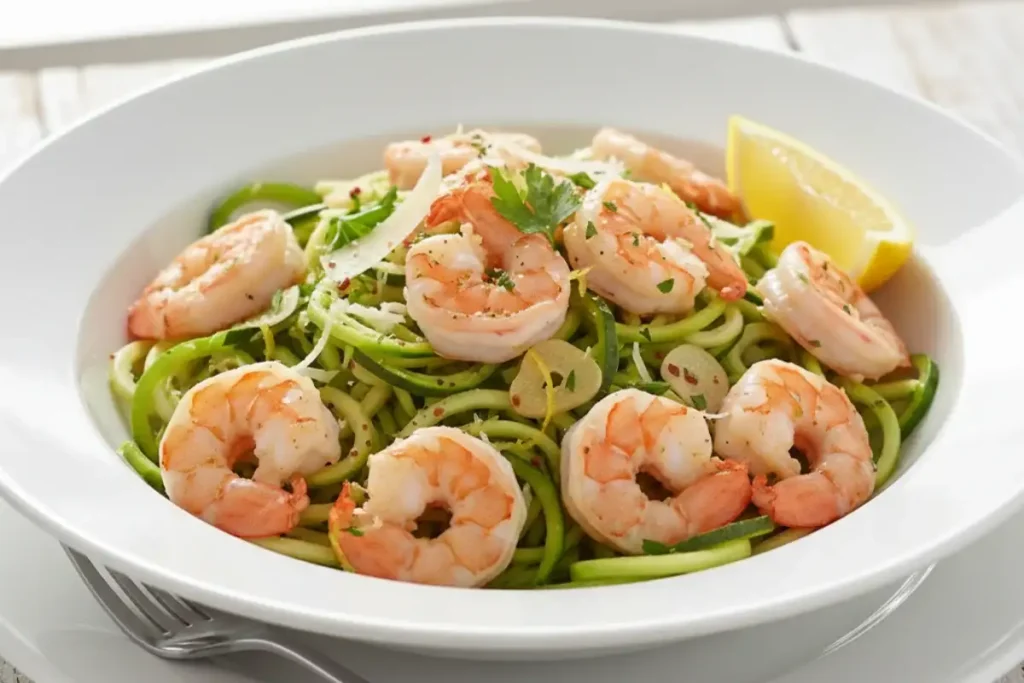
Light, fresh, and ready in 15 minutes. This low-carb dinner is perfect when you want something quick but satisfying after a long day.
Why it’s PCOS friendly: Shrimp is pure lean protein with minimal calories – one of the best protein sources for PCOS. Zucchini noodles replace high-glycemic pasta while adding fiber and nutrients. Garlic has proven anti-inflammatory properties.
Protein: 32g | Fiber: 4g | Calories: 290
Ingredients (4 servings):
For the shrimp:
- 1.5 lbs large shrimp (21-25 count), peeled and deveined
- ½ teaspoon sea salt
- ¼ teaspoon black pepper
- ¼ teaspoon paprika
For the garlic sauce:
- 4 tablespoons extra virgin olive oil, divided
- 8 cloves garlic, minced (yes, this much!)
- ¼ cup fresh lemon juice (about 2 lemons)
- Zest of 1 lemon
- ¼ teaspoon red pepper flakes
- ¼ cup fresh parsley, chopped
- 2 tablespoons fresh basil, chopped
For the zucchini noodles:
- 6 medium zucchini, spiralized
- ¼ teaspoon salt
For serving:
- Extra lemon wedges
- Grated parmesan (optional, omit for dairy-free)
- Fresh herbs
Instructions:
- Prep the zucchini noodles: Spiralize zucchini into noodles. Place in colander, sprinkle with ¼ teaspoon salt, and let sit 5 minutes to release excess water. Pat dry with paper towels.
- Season the shrimp: Pat shrimp dry. Toss with salt, pepper, and paprika.
- Cook the shrimp: Heat 2 tablespoons olive oil in large skillet over medium-high heat. When oil shimmers, add shrimp in single layer. Cook 2 minutes per side until pink and opaque. Remove to plate immediately (don’t overcook!).
- Make the garlic sauce: In same skillet, reduce heat to medium. Add remaining 2 tablespoons olive oil and all the garlic. Sauté 30-60 seconds until fragrant but not browned.
- Cook zucchini noodles: Add zucchini noodles to skillet. Toss with garlic oil for 2-3 minutes until slightly softened but still al dente.
- Combine: Add lemon juice, lemon zest, and red pepper flakes to pan. Toss. Return shrimp to pan. Add parsley and basil. Toss everything together.
- Serve immediately: Divide among plates. Top with extra herbs, lemon wedges, and parmesan if desired.
Nutrition per serving: 290 calories | 32g protein | 12g carbs | 14g fat | 4g fiber
My tip: Don’t overcook the zucchini noodles – they should still have a slight crunch, similar to al dente pasta. Overcooked zoodles release water and become mushy.
10. Beef and Vegetable Stir-Fry with Ginger
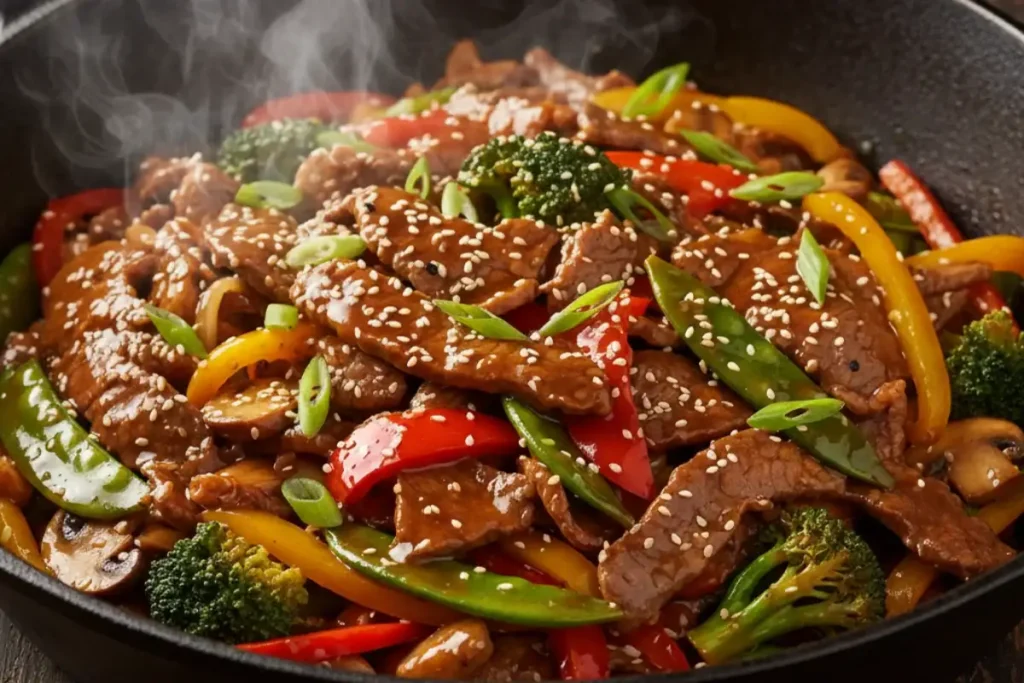
Bold flavors and balanced nutrition. This stir-fry satisfies cravings while supporting your PCOS management goals.
Why it’s PCOS friendly: Lean beef is an excellent source of iron, which is often low in women with PCOS due to irregular periods. Colorful vegetables deliver a wide range of antioxidants. Ginger and garlic are both powerful anti-inflammatories.
Protein: 38g | Fiber: 6g | Calories: 400
Ingredients (4 servings):
For the beef:
- 1.5 lbs sirloin steak, sliced very thin against the grain
- 1 tablespoon avocado oil
- ¼ teaspoon salt
- ¼ teaspoon black pepper
For the vegetables:
- 3 cups broccoli florets
- 2 cups snap peas, trimmed
- 1 cup bell peppers (mixed colors), sliced
- 1 cup cremini mushrooms, sliced
- 4 green onions, sliced
For the sauce:
- 3 tablespoons coconut aminos
- 1 tablespoon toasted sesame oil
- 1 tablespoon rice vinegar
- 1 tablespoon fresh ginger, finely grated
- 4 cloves garlic, minced
- 1 teaspoon arrowroot powder (thickener)
- 2 tablespoons water
For serving:
- Sesame seeds
- Fresh cilantro
- Cauliflower rice (optional)
Instructions:
- Make the sauce: Whisk coconut aminos, sesame oil, rice vinegar, ginger, and garlic in small bowl. In separate tiny bowl, mix arrowroot powder with water to create slurry. Set both aside.
- Slice the beef: Cut sirloin against the grain into very thin strips (⅛ inch thick). Season with salt and pepper.
- Cook beef in batches: Heat avocado oil in large wok or skillet over highest heat until smoking. Add half the beef in single layer. Don’t stir for 1 minute to get a sear. Stir-fry 1 more minute. Remove to plate. Repeat with remaining beef.
- Stir-fry vegetables: In same wok (add more oil if needed), add broccoli and 2 tablespoons water. Cover and steam 2 minutes. Remove lid. Add snap peas, peppers, and mushrooms. Stir-fry 3-4 minutes until vegetables are crisp-tender.
- Combine and finish: Return beef to wok. Pour sauce over everything. Toss well. Add arrowroot slurry and stir until sauce thickens slightly, about 30 seconds. Remove from heat. Stir in green onions.
- Serve: Garnish with sesame seeds and cilantro. Serve over cauliflower rice if desired.
Storage: 5 days refrigerated. Freezes well 3 months.
Nutrition per serving: 400 calories | 38g protein | 16g carbs | 20g fat | 6g fiber
My tip: The key to great stir-fry is HIGH heat and not overcrowding the pan. Cook in batches if needed. Slice beef partially frozen (20 minutes in freezer) for easier thin slicing.
11. Baked Chicken Thighs with Roasted Cauliflower and Herbs
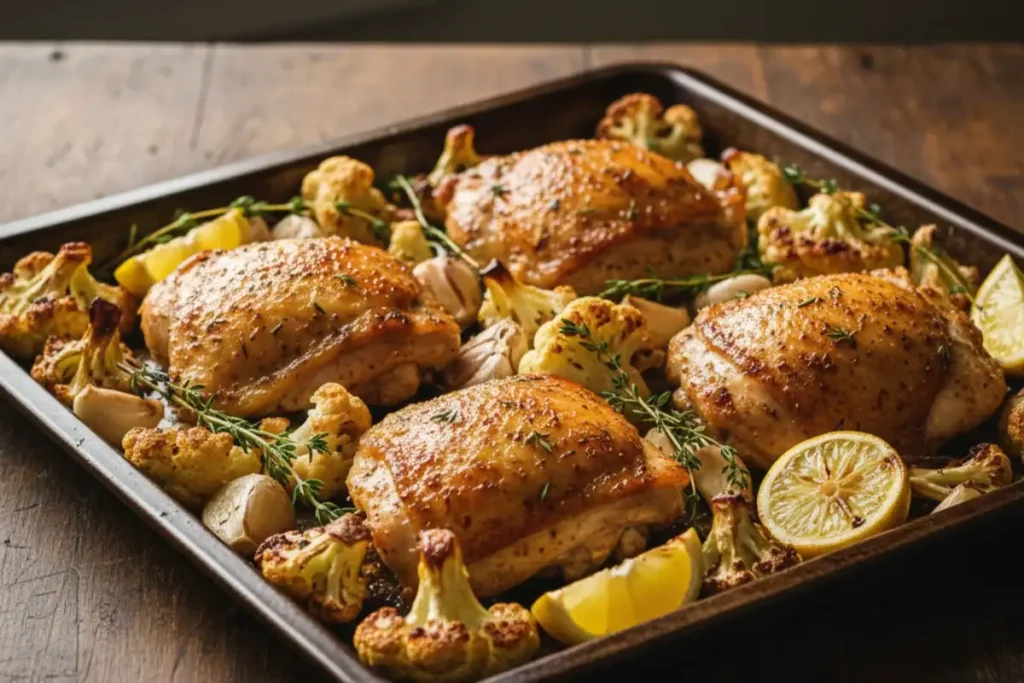
Crispy, flavorful chicken with perfectly roasted cauliflower. This is comfort food that loves your hormones back.
Why it’s PCOS friendly: Chicken thighs contain more iron and zinc than chicken breasts – both minerals often depleted in women with PCOS. Cauliflower is a cruciferous vegetable that supports healthy estrogen metabolism through its DIM content.
Protein: 42g | Fiber: 6g | Calories: 450
Ingredients (4 servings):
For the chicken:
- 8 bone-in, skin-on chicken thighs (about 2.5 lbs)
- 2 tablespoons extra virgin olive oil
- 2 teaspoons smoked paprika
- 1 teaspoon garlic powder
- 1 teaspoon dried thyme
- 1 teaspoon dried rosemary, crushed
- ¾ teaspoon sea salt
- ½ teaspoon black pepper
For the cauliflower:
- 1 large head cauliflower, cut into florets (about 6 cups)
- 3 tablespoons extra virgin olive oil
- 4 cloves garlic, minced
- ½ teaspoon sea salt
- ¼ teaspoon black pepper
- 2 tablespoons fresh parsley, chopped
For serving:
- Lemon wedges
- Fresh thyme sprigs
Instructions:
- Preheat oven: Set to 425°F (220°C). Position rack in upper third of oven.
- Season the chicken: Pat chicken thighs very dry with paper towels (essential for crispy skin!). Mix olive oil, paprika, garlic powder, thyme, rosemary, salt, and pepper. Rub mixture all over chicken, including under the skin if possible.
- Prep the cauliflower: Toss cauliflower florets with olive oil, garlic, salt, and pepper.
- Arrange on pan: Spread cauliflower on large rimmed baking sheet. Nestle chicken thighs among cauliflower, skin-side up.
- Bake: Roast 35-40 minutes until chicken skin is golden and crispy, internal temperature reaches 165°F, and cauliflower is tender and caramelized on edges.
- Rest and serve: Let chicken rest 5 minutes. Sprinkle cauliflower with fresh parsley. Serve with lemon wedges and fresh thyme.
Nutrition per serving: 450 calories | 42g protein | 10g carbs | 26g fat | 6g fiber
My tip: Don’t skip the crispy skin – it adds flavor and the healthy fats actually help keep you satisfied longer. Just make sure to buy quality pasture-raised chicken when possible.
SNACK RECIPES
12. Spiced Roasted Chickpeas
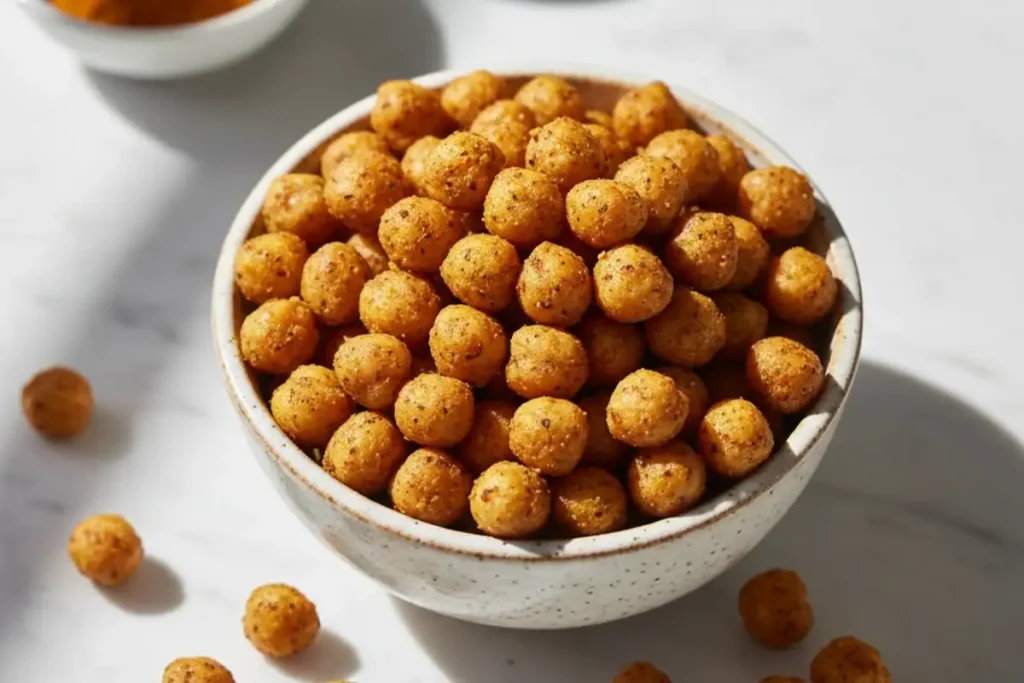
Crunchy, addictive, and so much better than chips. These chickpeas satisfy the need for something savory and crunchy.
Why it’s PCOS friendly: Chickpeas are high in both fiber and protein – the perfect combination for blood sugar stability. They have a low glycemic index and keep blood sugar stable between meals. The anti-inflammatory spices provide extra PCOS support.
Protein: 8g | Fiber: 7g | Calories: 180
Ingredients (4 servings):
For the chickpeas:
- 2 cans (15 oz each) chickpeas, drained and rinsed
- 2 tablespoons extra virgin olive oil
For the spice mix:
- 1 teaspoon ground cumin
- 1 teaspoon smoked paprika
- ½ teaspoon garlic powder
- ½ teaspoon turmeric
- ¼ teaspoon cayenne pepper (optional)
- ½ teaspoon sea salt
Instructions:
- Preheat oven: Set to 400°F (200°C).
- Dry the chickpeas (crucial step!): Spread drained chickpeas on clean kitchen towel. Place another towel on top and roll gently to dry. Remove any loose skins. Let air dry 10 minutes. The drier they are, the crunchier they’ll get.
- Mix the spices: Combine cumin, paprika, garlic powder, turmeric, cayenne (if using), and salt in small bowl.
- Season chickpeas: Place completely dry chickpeas in large bowl. Toss with olive oil until evenly coated. Add spice mixture and toss until chickpeas are evenly covered.
- Roast: Spread chickpeas in single layer on rimmed baking sheet. Do not overcrowd – use two pans if needed. Roast 35-40 minutes, shaking pan every 15 minutes, until chickpeas are deep golden and crunchy.
- Cool completely: Remove from oven and let cool on pan. They will crisp up more as they cool. Don’t cover while warm or they’ll get soggy.
Storage: 5 days in airtight container at room temperature. Do not refrigerate.
Nutrition per serving: 180 calories | 8g protein | 22g carbs | 6g fat | 7g fiber
My tip: The most important step is getting chickpeas VERY dry before roasting. Any moisture = soggy chickpeas. Also, let them cool completely before storing – they crisp up as they cool.
13. Cucumber Hummus Bites with Everything Seasoning
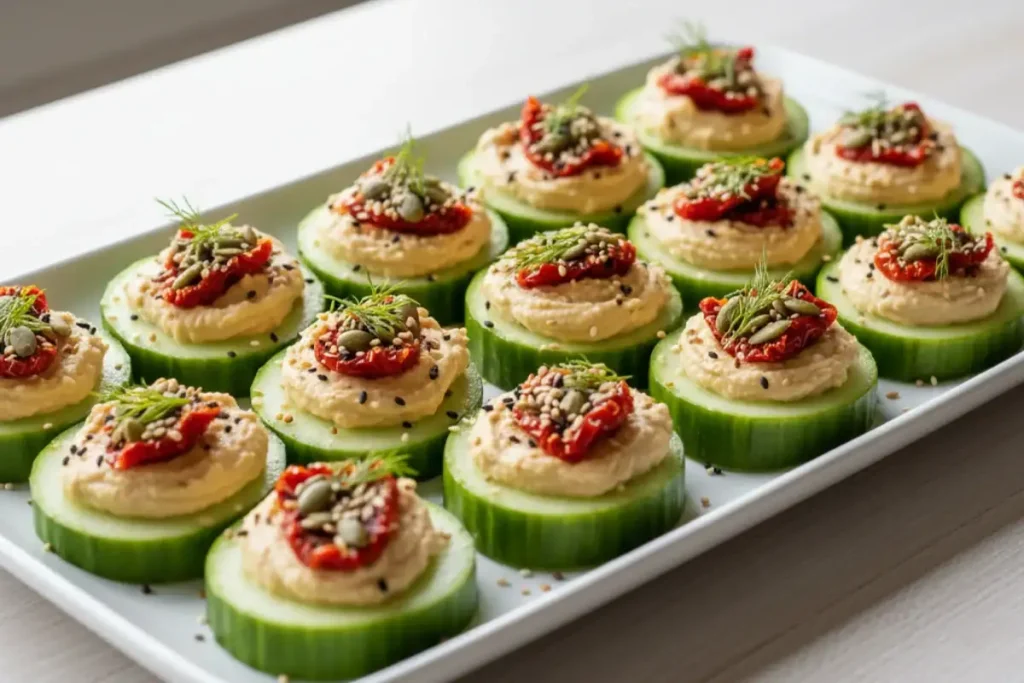
Fresh, cooling, and perfectly portioned. These bites are ideal when you need something light but satisfying between meals.
Why it’s PCOS friendly: Cucumbers are 95% water and very low glycemic – perfect for PCOS. Hummus provides plant-based protein and fiber with healthy fats from tahini and olive oil. Together they create a balanced snack that won’t spike blood sugar.
Protein: 6g | Fiber: 4g | Calories: 150
Ingredients (2 servings):
For the base:
- 2 large English cucumbers
- ½ cup hummus (homemade or store-bought with clean ingredients)
For the toppings:
- 2 tablespoons sun-dried tomatoes, finely chopped
- 2 tablespoons fresh dill, chopped
- 1 tablespoon pumpkin seeds
- 1 teaspoon everything bagel seasoning
- Flaky sea salt
- Extra virgin olive oil for drizzling
Instructions:
- Slice cucumbers: Cut cucumbers into ½-inch thick rounds. You should get about 24 rounds.
- Create a well (optional): Use small spoon or melon baller to scoop a shallow well in center of each cucumber round. This helps the toppings stay in place.
- Add hummus: Top each cucumber round with about 1 teaspoon hummus, spreading to edges.
- Add toppings: Top each with a piece of sun-dried tomato, sprinkle of fresh dill, 2-3 pumpkin seeds, and pinch of everything bagel seasoning.
- Finish: Add tiny pinch of flaky sea salt and small drizzle of olive oil on each bite.
- Serve: Arrange on plate and serve immediately, or store covered in refrigerator up to 4 hours.
Nutrition per serving: 150 calories | 6g protein | 16g carbs | 8g fat | 4g fiber
My tip: Use thick-sliced cucumber as a “cracker” replacement for anything – it’s a PCOS-friendly base that adds hydration and nutrients instead of refined carbs.
For more high-fiber options, see my high fiber breakfast recipes.
14. Greek Yogurt Parfait with Berries and Seeds
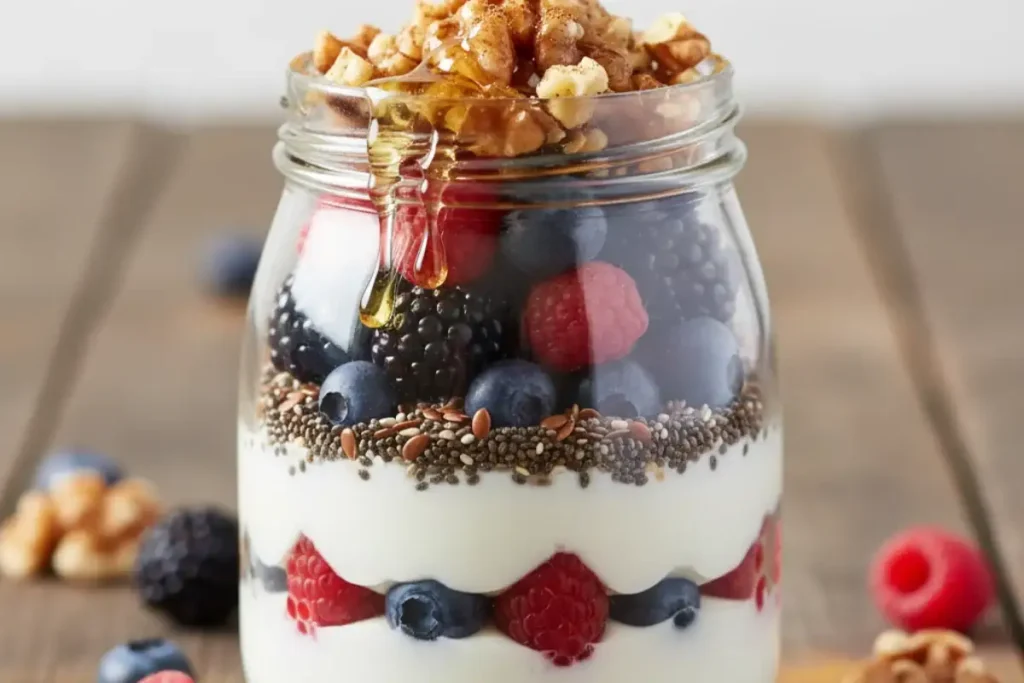
Simple, protein-packed, and naturally sweet. This snack stabilizes blood sugar and satisfies sweet cravings the healthy way.
Why it’s PCOS friendly: Greek yogurt contains twice the protein of regular yogurt with less lactose. Berries are the lowest glycemic fruits and packed with antioxidants. The seeds provide omega-3 fatty acids and fiber. Cinnamon improves insulin sensitivity.
Protein: 18g | Fiber: 5g | Calories: 220
Ingredients (1 serving):
For the base:
- 1 cup plain Greek yogurt (full-fat or 2% – avoid fat-free)
- ½ teaspoon Ceylon cinnamon
For the toppings:
- ½ cup fresh mixed berries (blueberries, raspberries, blackberries)
- 1 tablespoon ground flaxseed
- 1 tablespoon chia seeds
- 1 tablespoon raw walnuts, chopped
- 1 teaspoon raw honey or monk fruit sweetener (optional)
Instructions:
- Mix yogurt base: Stir cinnamon into Greek yogurt until evenly combined.
- Layer in glass or bowl: Spoon half the yogurt into a glass, jar, or bowl.
- Add berry layer: Add half the berries on top of yogurt.
- Add remaining layers: Add remaining yogurt, then remaining berries.
- Add seed and nut toppings: Sprinkle flaxseed, chia seeds, and walnuts on top.
- Finish: Drizzle with tiny amount of honey or monk fruit if desired (though berries usually provide enough sweetness).
Nutrition per serving: 220 calories | 18g protein | 20g carbs | 10g fat | 5g fiber
My tip: Choose full-fat or 2% Greek yogurt, not fat-free. The healthy fats help keep you fuller longer and support hormone production. Fat-free versions often have added sugar and don’t satisfy as well.
DESSERT
15. Dark Chocolate Avocado Mousse
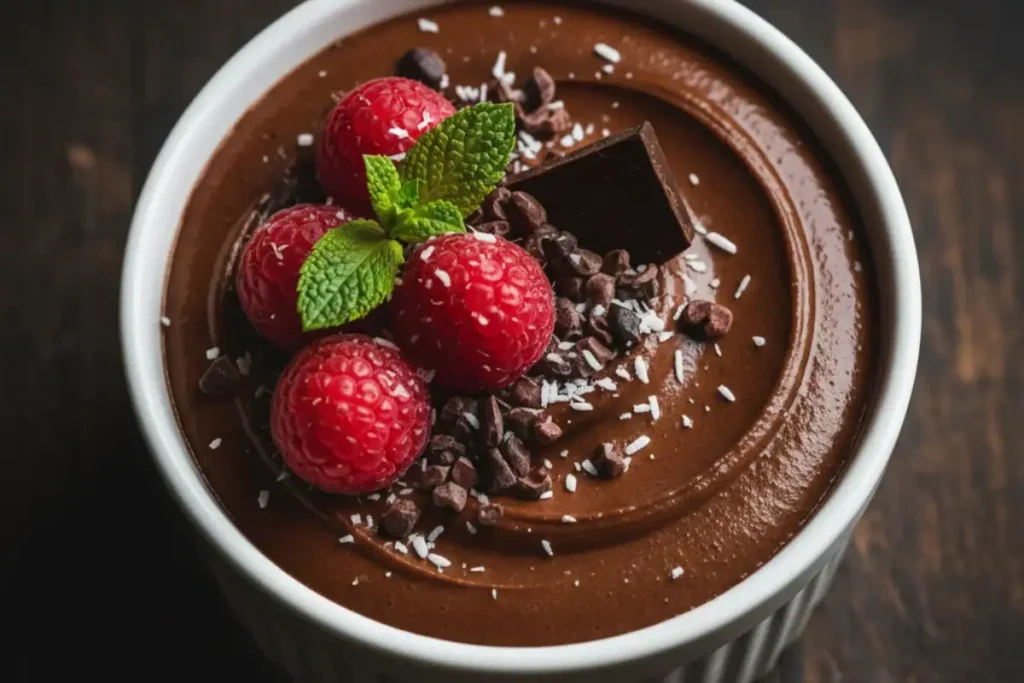
Rich, creamy, and secretly healthy. This dessert satisfies chocolate cravings without the sugar crash that worsens PCOS symptoms.
Why it’s PCOS friendly: Dark chocolate (70%+ cacao) is high in antioxidants and magnesium – a mineral many women with PCOS are deficient in. Avocado provides healthy monounsaturated fats that support hormone production. The minimal sweetener means minimal blood sugar impact.
Protein: 4g | Fiber: 8g | Calories: 250
Ingredients (4 servings):
For the mousse:
- 2 ripe avocados (should yield easily to gentle pressure)
- ¼ cup unsweetened cocoa powder (use high-quality Dutch-process)
- ¼ cup unsweetened almond milk
- 3 tablespoons pure maple syrup OR 2 tablespoons monk fruit sweetener (for lower sugar)
- 1 teaspoon pure vanilla extract
- Pinch of sea salt
For the toppings:
- Fresh raspberries or strawberries
- Cacao nibs
- Unsweetened coconut flakes
- Chopped dark chocolate (70%+ cacao)
- Fresh mint leaves
Instructions:
- Prep avocados: Cut avocados in half, remove pits. Scoop flesh into food processor or high-powered blender.
- Add remaining ingredients: Add cocoa powder, almond milk, maple syrup (or monk fruit), vanilla extract, and salt.
- Blend until silky smooth: Process 2-3 minutes, scraping down sides as needed, until mousse is completely smooth with no lumps. It should be thick and creamy like chocolate pudding.
- Taste and adjust: Taste and add more sweetener if needed, keeping in mind that chilling will mellow the flavors slightly.
- Chill: Divide mousse among 4 small ramekins, cups, or bowls. Cover with plastic wrap pressed directly on surface (prevents browning). Refrigerate at least 30 minutes or up to 3 days.
- Serve: Top with fresh berries, cacao nibs, coconut flakes, dark chocolate pieces, and mint leaves.
Storage: 3 days refrigerated with plastic wrap touching surface.
Nutrition per serving: 250 calories | 4g protein | 22g carbs | 18g fat | 8g fiber
My tip: Use monk fruit sweetener instead of maple syrup for a nearly zero-glycemic dessert that still tastes indulgent. The avocado provides such great creaminess that you won’t notice less sweetener.
PCOS Friendly Foods: Complete Quick Reference
Use this guide to build your own PCOS friendly meals:
Best Proteins for PCOS:
| Food | Serving | Protein | Why It Helps |
|---|---|---|---|
| Wild salmon | 5 oz | 35g | Omega-3s reduce inflammation |
| Chicken breast | 5 oz | 38g | Lean, versatile, affordable |
| Chicken thighs | 5 oz | 32g | Higher in iron and zinc |
| Eggs | 2 large | 12g | Complete protein, choline for hormones |
| Ground turkey | 4 oz | 28g | Lean, great for meal prep |
| Shrimp | 5 oz | 30g | Very low calorie, high protein |
| Cod/white fish | 5 oz | 32g | Lean, easy to digest |
| Legumes | 1 cup | 15g | Fiber + protein combination |
Best Vegetables for PCOS:
| Food | Why It Helps |
|---|---|
| Broccoli | DIM compound supports estrogen balance |
| Brussels sprouts | Cruciferous, hormone-balancing |
| Cauliflower | Low carb, supports detoxification |
| Leafy greens | Magnesium, folate, anti-inflammatory |
| Bell peppers | Vitamin C, antioxidants |
| Zucchini | Low carb pasta replacement |
| Asparagus | Prebiotic fiber, folate |
| Mushrooms | Vitamin D, immune support |
Best Healthy Fats for PCOS:
| Food | Serving | Why It Helps |
|---|---|---|
| Avocado | ½ medium | Monounsaturated fats, fiber |
| Extra virgin olive oil | 1 tbsp | Anti-inflammatory, heart healthy |
| Walnuts | ¼ cup | Omega-3s, protein |
| Almonds | ¼ cup | Vitamin E, magnesium |
| Chia seeds | 2 tbsp | Omega-3s, fiber |
| Flaxseed | 2 tbsp | Lignans support hormone balance |
| Pumpkin seeds | 2 tbsp | Zinc, magnesium |
Best Complex Carbs for PCOS:
| Food | Glycemic Index | Why It Helps |
|---|---|---|
| Quinoa | 53 (Low) | Complete protein, fiber |
| Sweet potato | 54 (Low) | Fiber-rich, sustained energy |
| Steel-cut oats | 42 (Low) | Beta-glucan fiber |
| Legumes | 20-40 (Low) | Protein + fiber combo |
| Berries | 25-40 (Low) | Lowest sugar fruits, antioxidants |
| Cauliflower rice | 10 (Very Low) | Great rice substitute |
Sample 3-Day PCOS Meal Plan
Day 1:
| Meal | Recipe | Protein | Fiber |
|---|---|---|---|
| Breakfast | Veggie-Loaded Egg Scramble | 28g | 6g |
| Snack | Greek Yogurt Parfait | 18g | 5g |
| Lunch | Mediterranean Salmon Salad | 38g | 8g |
| Snack | Spiced Roasted Chickpeas | 8g | 7g |
| Dinner | Lemon Garlic Shrimp with Zoodles | 32g | 4g |
| Total | 124g | 30g |
Day 2:
| Meal | Recipe | Protein | Fiber |
|---|---|---|---|
| Breakfast | Cinnamon Protein Overnight Oats | 25g | 8g |
| Snack | Cucumber Hummus Bites | 6g | 4g |
| Lunch | Asian Turkey Lettuce Wraps | 35g | 5g |
| Snack | Handful of almonds (¼ cup) | 6g | 4g |
| Dinner | Slow Cooker Chicken Tikka Masala | 40g | 5g |
| Total | 112g | 26g |
Day 3:
| Meal | Recipe | Protein | Fiber |
|---|---|---|---|
| Breakfast | Green Goddess Smoothie Bowl | 30g | 10g |
| Snack | Greek Yogurt Parfait | 18g | 5g |
| Lunch | Chicken Quinoa Power Bowl | 42g | 9g |
| Snack | Cucumber Hummus Bites | 6g | 4g |
| Dinner | Herb-Crusted Baked Cod | 35g | 7g |
| Dessert | Dark Chocolate Avocado Mousse (½) | 2g | 4g |
| Total | 133g | 39g |
10 Tips for PCOS Meal Success
1. Never skip meals Skipping meals causes blood sugar crashes that worsen PCOS symptoms. Eat regular meals with protein at each one.
2. Always pair carbs with protein or fat Never eat carbs alone. This simple rule prevents insulin spikes.
3. Prioritize protein at breakfast A protein-rich breakfast sets the tone for stable blood sugar all day. Aim for 25-30g protein.
4. Eat the rainbow Different colored vegetables provide different antioxidants that fight inflammation.
5. Cook with anti-inflammatory spices daily Add turmeric, ginger, cinnamon, and garlic to meals as often as possible.
6. Meal prep for success Having PCOS friendly meals ready prevents reaching for convenient but harmful options.
7. Stay hydrated Water helps with hormone balance, reduces cravings, and supports detoxification.
8. Eat cruciferous vegetables daily Broccoli, cauliflower, Brussels sprouts, and cabbage support healthy estrogen metabolism.
9. Choose low glycemic fruits Stick to berries most of the time. Save higher sugar fruits for occasional treats paired with protein.
10. Don’t aim for perfection Consistency matters more than perfection. One “off” meal won’t ruin your progress.
Frequently Asked Questions
Can I eat carbs with PCOS?
Yes! The key is choosing the right carbs. Focus on low glycemic options like quinoa, sweet potato, legumes, and berries. Always pair carbs with protein or fat to slow glucose absorption. Avoid refined carbs like white bread, pasta, and sugar.
How much protein should I eat with PCOS?
Aim for 25-35 grams of protein per meal. This helps stabilize blood sugar and keeps you full between meals. Most women with PCOS benefit from 100-130 grams of protein daily, spread across meals and snacks.
Is dairy bad for PCOS?
It depends on the individual. Some women see significant improvement cutting dairy, while others tolerate it fine. If you struggle with acne, bloating, or digestive issues, try eliminating dairy for 30 days to see if symptoms improve. Greek yogurt is often better tolerated than milk.
What about fruit?
Berries are best – they’re lowest in sugar and highest in antioxidants. Limit high-sugar fruits like bananas, grapes, mangos, and pineapple. When you do eat fruit, always pair it with protein (like nuts or Greek yogurt) to slow sugar absorption.
How quickly will I see results eating this way?
Many women notice improved energy, reduced cravings, and less bloating within 2 weeks. Hormonal changes like more regular cycles typically take 2-3 months of consistent eating. Weight loss (if that’s a goal) usually begins within the first month.
Do I need to count calories?
Not necessarily. Focus on eating PCOS friendly foods, getting enough protein, and listening to hunger cues. The fiber and protein in these meals naturally regulate appetite. However, if you’re trying to lose weight and not seeing results, tracking for a week can reveal patterns.
More PCOS-Supportive Resources
Continue supporting your health with these guides:
- Hormone balancing foods – complete guide to foods that support hormones
- Anti-inflammatory recipes – reduce inflammation naturally
- Blood sugar balancing breakfast recipes – start your day right
- High fiber breakfast recipes – fiber for gut health and hormones
- Gut health breakfast recipes – the gut-hormone connection
- High protein meal prep for weight loss – meal prep made easy
Final Thoughts
PCOS friendly meals don’t have to be complicated, boring, or restrictive. These 15 recipes prove that eating for hormone health can be delicious, satisfying, and completely sustainable long-term.
The key is consistency. One meal won’t change your symptoms, but weeks and months of nourishing food will transform how you feel.
Start with one recipe this week. Then try another. Build a collection of PCOS friendly meals that you genuinely love eating.
Food is powerful medicine. Your body will thank you.
Which recipe will you try first? I’d love to hear in the comments!