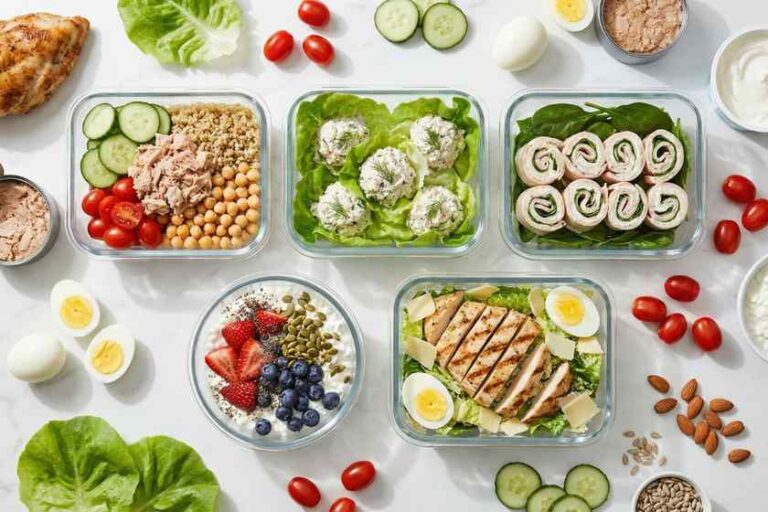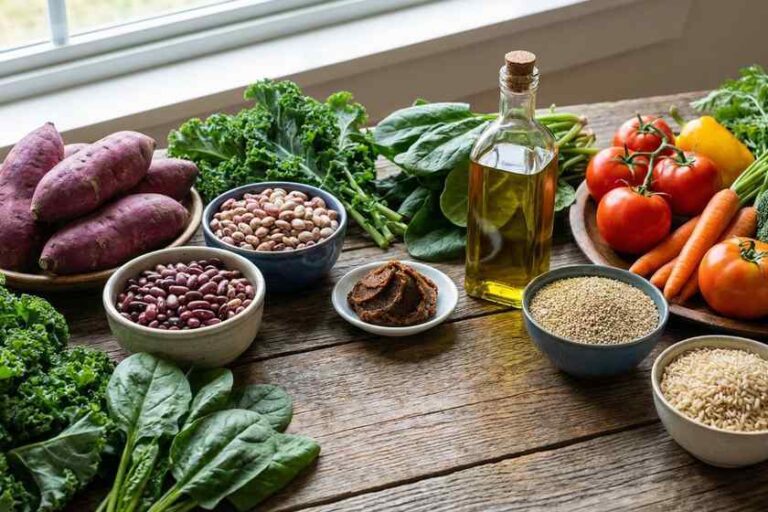
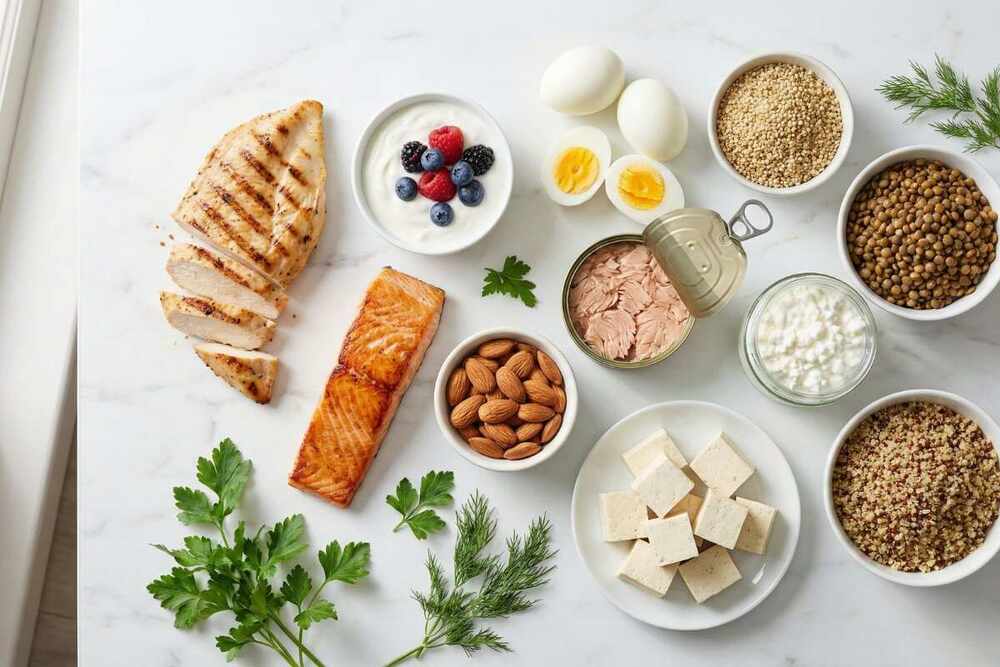
High Protein Foods: Easy Ways to Get 30g Per Meal
Struggling to hit your daily protein goals? You’re not alone. I was constantly hungry between meals until a friend asked, “How much protein are you eating?” The answer? Maybe 10-15g per meal. That changed everything.
Getting 30g of protein per meal is easier than you think when you know the right high protein foods. This guide shows you exactly which foods deliver the most protein, plus real meal examples you can copy today.
Why Protein Matters
According to the Academy of Nutrition and Dietetics, most people need:
- 0.8-1g per kilogram for general health
- 1.2-1.6g per kilogram if active or building muscle
- 1.6-2.2g per kilogram for serious athletes
That means 20-30g of protein per meal for most people.
Animal-Based Protein Foods
Poultry
I grill 6 chicken breasts every Sunday—done in 20 minutes.
- Chicken breast (cooked): 31g per 100g
- Turkey breast (cooked): 30g per 100g
- Chicken thighs (cooked): 26g per 100g
- Ground turkey (93% lean): 27g per 100g
Red Meat
Lean cuts 2-3 times weekly work for me.
- Lean beef (sirloin): 26g per 100g
- Ground beef (90% lean): 26g per 100g
- Bison meat: 28g per 100g
- Venison: 30g per 100g
Seafood
Canned tuna is my secret weapon—one can = 35g protein for under $2.
- Salmon (wild-caught): 25g per 100g
- Tuna (canned): 26g per 100g
- Cod: 23g per 100g
- Shrimp: 24g per 100g
- Tilapia: 26g per 100g
The American Heart Association recommends eating fish twice weekly for heart health.
Eggs & Dairy
Four eggs at breakfast = 24g protein before 9 AM.
- Whole eggs: 6g per egg
- Egg whites: 3.6g per egg
- Greek yogurt (non-fat): 10g per 100g
- Cottage cheese (low-fat): 11g per 100g
- Cheddar cheese: 25g per 100g
- Milk (skim): 3.4g per 100ml
Plant-Based Protein Foods
Legumes
I cook a huge batch every Sunday—$1.50 per pound, lasts all week.
- Lentils (cooked): 9g per 100g
- Chickpeas (cooked): 9g per 100g
- Black beans (cooked): 9g per 100g
- Kidney beans (cooked): 9g per 100g
- Edamame: 11g per 100g
Soy Products
Tofu was weird until I learned to press and season it properly.
- Tofu (firm): 8g per 100g
- Tempeh: 19g per 100g
- Edamame: 11g per 100g
- Soy milk: 3.3g per 100ml
For plant-based options, check these high-protein vegetarian meals.
Nuts & Seeds
Great for snacking, not your main protein source.
- Almonds: 21g per 100g
- Peanuts: 26g per 100g
- Pumpkin seeds: 19g per 100g
- Hemp seeds: 32g per 100g
- Chia seeds: 17g per 100g
Research from Harvard T.H. Chan School of Public Health shows nuts support heart health despite being calorie-dense.
Whole Grains
They add up when combined with other sources.
- Quinoa (cooked): 4g per 100g
- Oats (dry): 13g per 100g
- Buckwheat (cooked): 3.4g per 100g
- Wild rice (cooked): 4g per 100g
My high-protein overnight oats with protein powder = 35g total.
Protein Supplements
I use whey on busy mornings—convenient, not necessary.
- Whey protein isolate: 25-30g per scoop
- Casein protein: 24g per scoop
- Pea protein: 20-24g per scoop
- Collagen peptides: 18-20g per scoop
Try these protein smoothie recipes for delicious ways to use powder.
30g Protein Breakfast Ideas
Classic Protein Breakfast
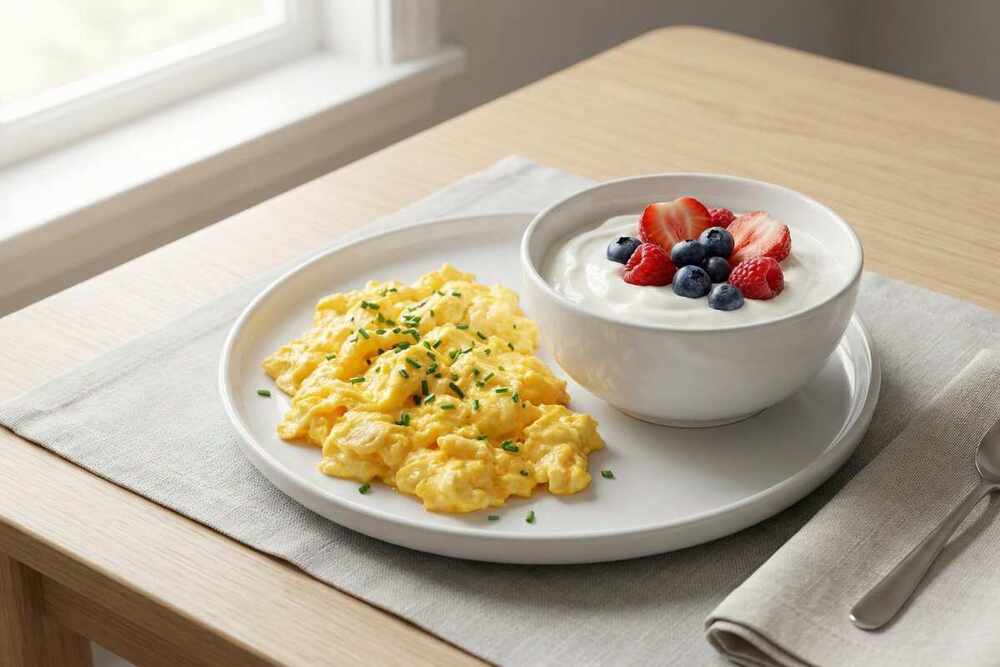
Ingredients:
- 4 large eggs
- 1 cup Greek yogurt (non-fat or 2%)
- ½ cup mixed berries (fresh or frozen)
- 1 tablespoon honey (optional)
- Pinch of cinnamon
Instructions:
- Scramble eggs in a non-stick pan with cooking spray—takes 5 minutes
- While eggs cook, mix Greek yogurt with berries and honey
- Sprinkle cinnamon on the yogurt
- Serve immediately
Nutrition:
- Calories: 430
- Protein: 39g
- Carbs: 32g
- Fat: 18g
Pro Tip: Prep berries in containers Sunday night for grab-and-go assembly.
High-Protein Oatmeal
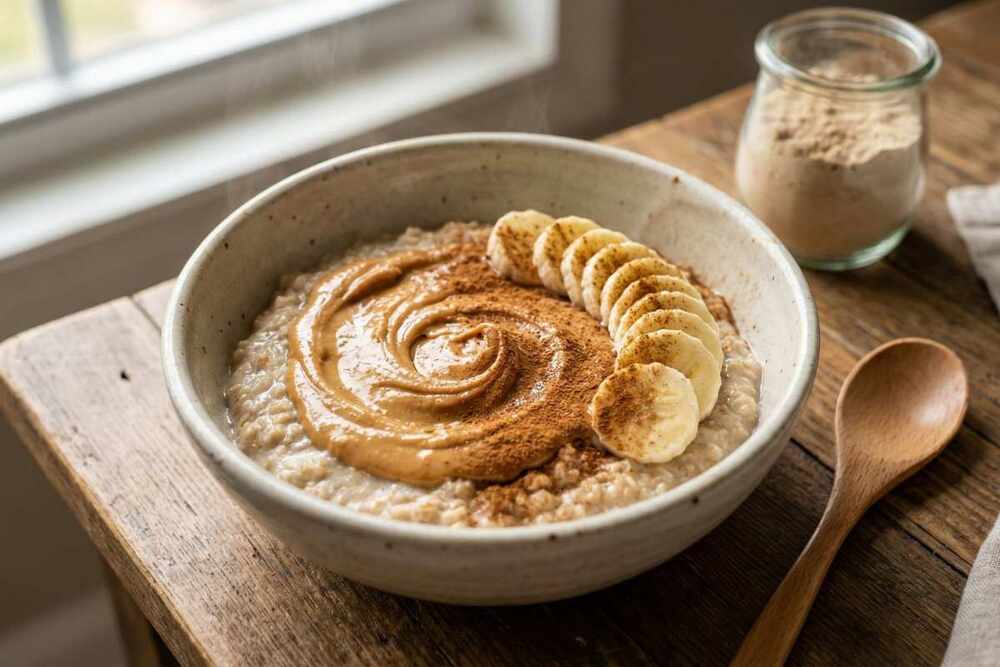
Ingredients:
- ½ cup dry oats
- 1 cup unsweetened almond milk
- 1 scoop vanilla protein powder (whey or plant-based)
- 2 tablespoons peanut butter
- 1 sliced banana
- Pinch of cinnamon
- 1 tablespoon chia seeds (optional)
Instructions:
- Cook oats in almond milk according to package directions (microwave 2 minutes)
- Let cool for 1 minute, then stir in protein powder until smooth
- Top with peanut butter, banana slices, cinnamon, and chia seeds
- Add a splash more milk if too thick
Nutrition:
- Calories: 520
- Protein: 39g
- Carbs: 58g
- Fat: 16g
Pro Tip: Mix protein powder after cooking to prevent clumping. Add water if needed for creaminess.
Breakfast Burrito
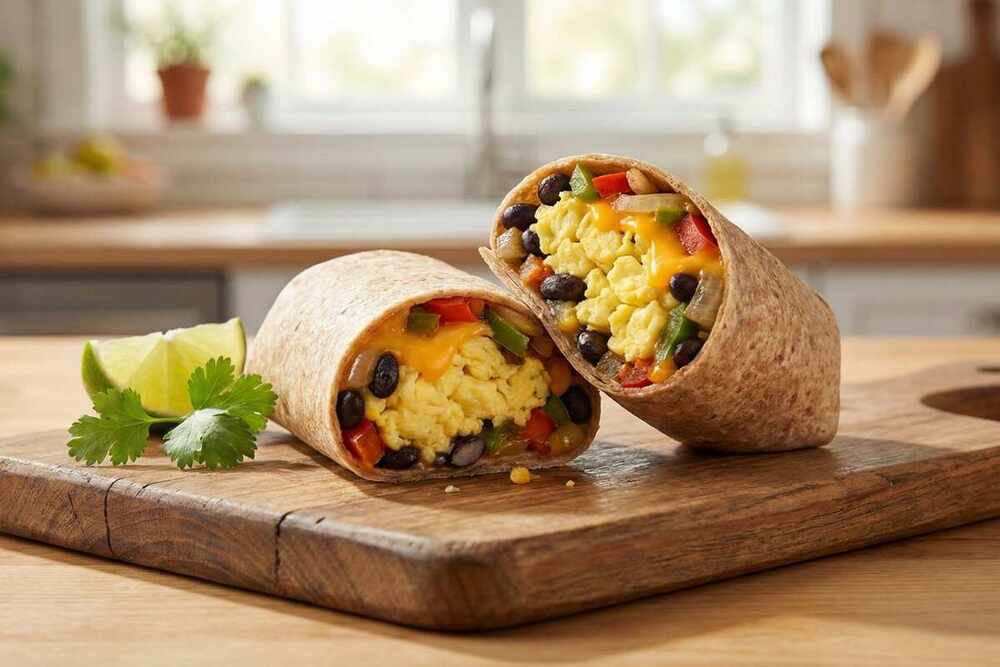
Ingredients (makes 2):
- 6 large eggs
- 1 cup black beans, drained and rinsed
- ½ cup shredded cheddar cheese
- 2 large whole wheat tortillas
- ¼ cup salsa
- ¼ cup diced bell peppers
- 2 tablespoons chopped cilantro
- Salt and pepper to taste
Instructions:
- Scramble eggs in a large pan, season with salt and pepper
- Warm black beans in microwave for 1 minute
- Warm tortillas for 15 seconds to make them pliable
- Divide eggs, beans, cheese, peppers, and salsa between tortillas
- Fold in sides, roll tightly
- To freeze: wrap individually in foil, store in freezer bags
Nutrition (per burrito):
- Calories: 485
- Protein: 36g
- Carbs: 42g
- Fat: 19g
Pro Tip: Reheat frozen burritos in microwave for 90 seconds, then crisp in a dry skillet for 30 seconds per side.
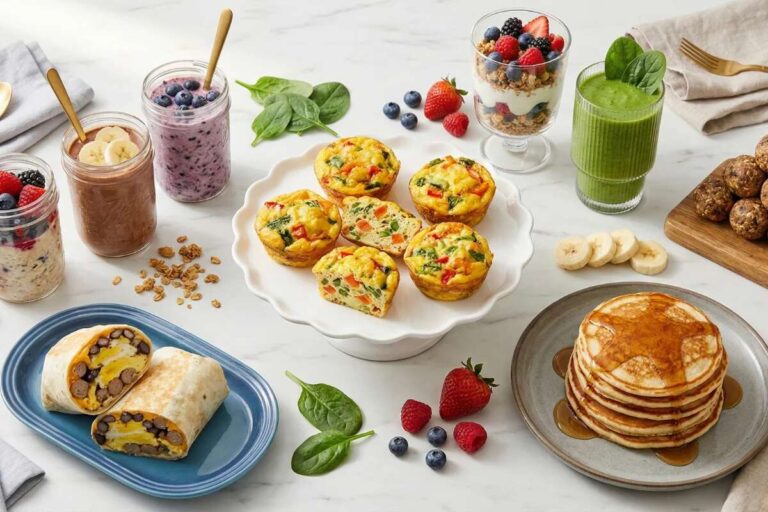
For more morning options, see these high-protein breakfast options.
Cottage Cheese Protein Pancakes
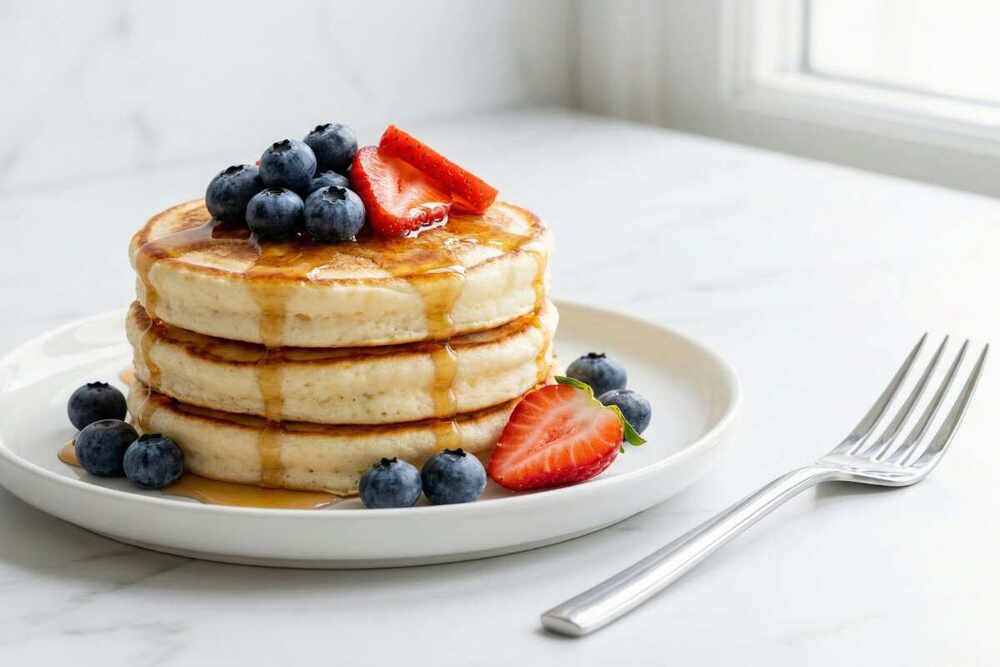
Ingredients (serves 2):
- 1 cup cottage cheese
- 3 large eggs
- ½ cup oat flour (blend rolled oats)
- 1 teaspoon vanilla extract
- ½ teaspoon baking powder
- ¼ teaspoon cinnamon
- 1 tablespoon maple syrup (optional)
Instructions:
- Blend cottage cheese until smooth (this is key)
- Add eggs, oat flour, vanilla, baking powder, cinnamon—blend until combined
- Heat non-stick griddle over medium heat
- Pour ¼ cup batter per pancake
- Cook until bubbles form (2-3 minutes), flip, cook 1-2 minutes more
- Serve with berries and a drizzle of maple syrup
Nutrition (per serving, 3 pancakes):
- Calories: 310
- Protein: 28g
- Carbs: 26g
- Fat: 10g
Pro Tip: These freeze beautifully. Reheat in toaster for quick weekday breakfasts.
30g Protein Lunch Ideas
Chicken Power Bowl
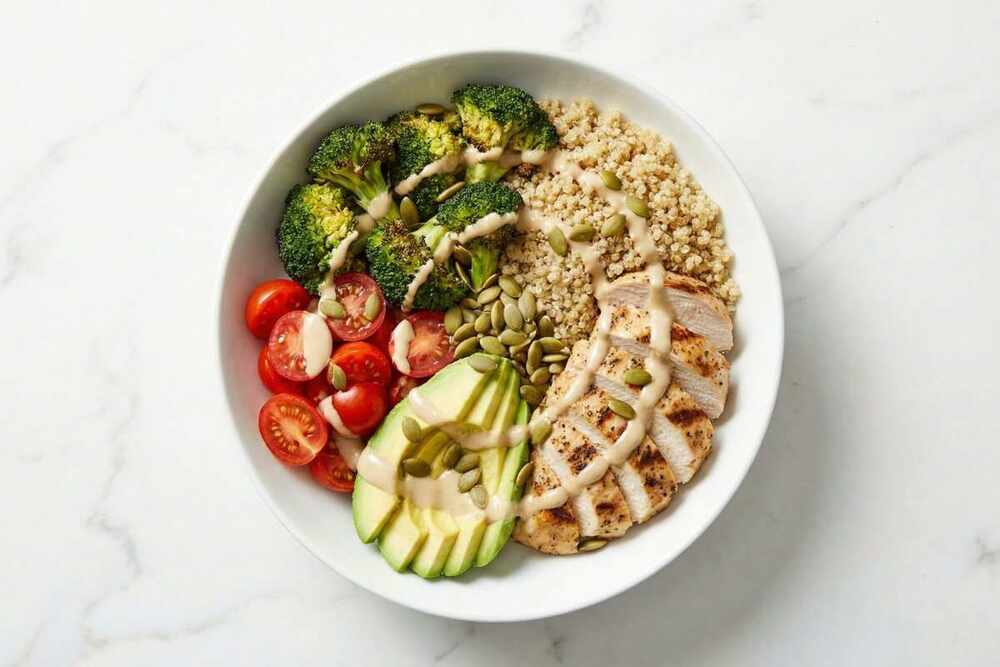
Ingredients (serves 1):
- 150g grilled chicken breast, sliced
- 1 cup cooked quinoa
- 1 cup roasted broccoli
- ½ cup cherry tomatoes, halved
- ¼ avocado, sliced
- 2 tablespoons tahini dressing
- 1 tablespoon pumpkin seeds
- Lemon wedge
Instructions:
- If meal prepping: grill 6-8 chicken breasts on Sunday with salt, pepper, garlic powder
- Reheat chicken in microwave for 60 seconds
- Assemble bowl with quinoa as base
- Arrange chicken, vegetables, and avocado on top
- Drizzle with tahini dressing, sprinkle seeds
- Squeeze lemon over everything
Nutrition:
- Calories: 580
- Protein: 55g
- Carbs: 48g
- Fat: 18g
Pro Tip: Prep 5 bowls Sunday night. Keep dressing separate until ready to eat.
Tuna Salad Loaded
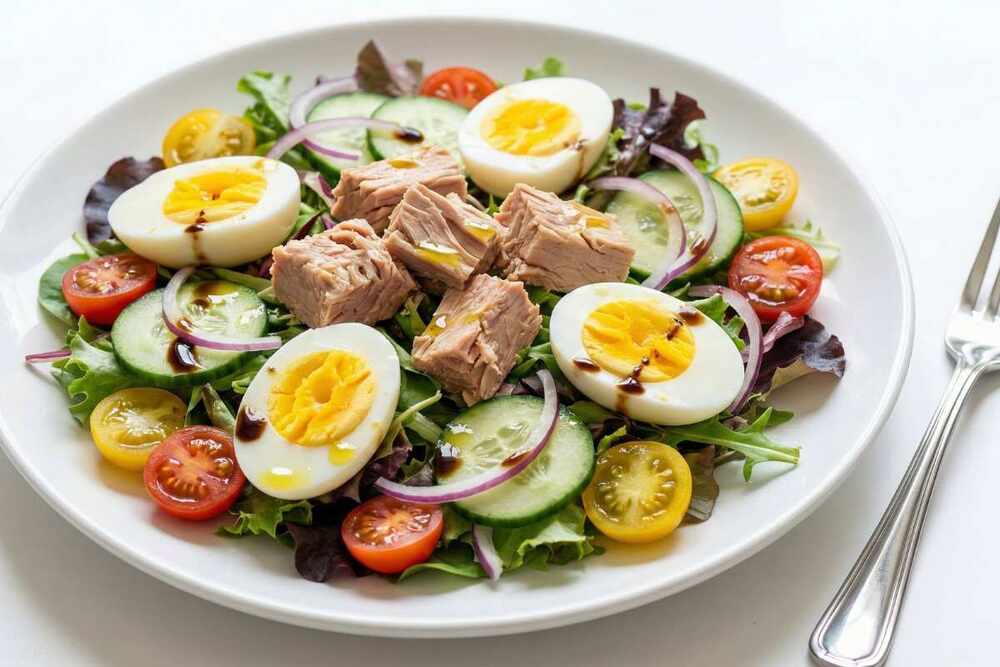
Ingredients (serves 1):
- 1 can (140g) tuna in water, drained
- 2 hard-boiled eggs, chopped
- 3 cups mixed greens
- ½ cucumber, sliced
- ½ cup cherry tomatoes
- ¼ red onion, thinly sliced
- 2 tablespoons olive oil
- 1 tablespoon balsamic vinegar
- Salt, pepper, and red pepper flakes
Instructions:
- Hard-boil eggs in advance (I keep 12 in the fridge)
- Arrange greens in a large bowl
- Top with tuna, chopped eggs, cucumber, tomatoes, and onion
- Drizzle with olive oil and vinegar
- Season with salt, pepper, and red pepper flakes
- Toss and eat immediately
Nutrition:
- Calories: 420
- Protein: 47g
- Carbs: 12g
- Fat: 22g
Pro Tip: Buy tuna in bulk when on sale. One case lasts me a month.
For more quick options, try these no-cook high-protein lunches.
Lentil Chicken Soup
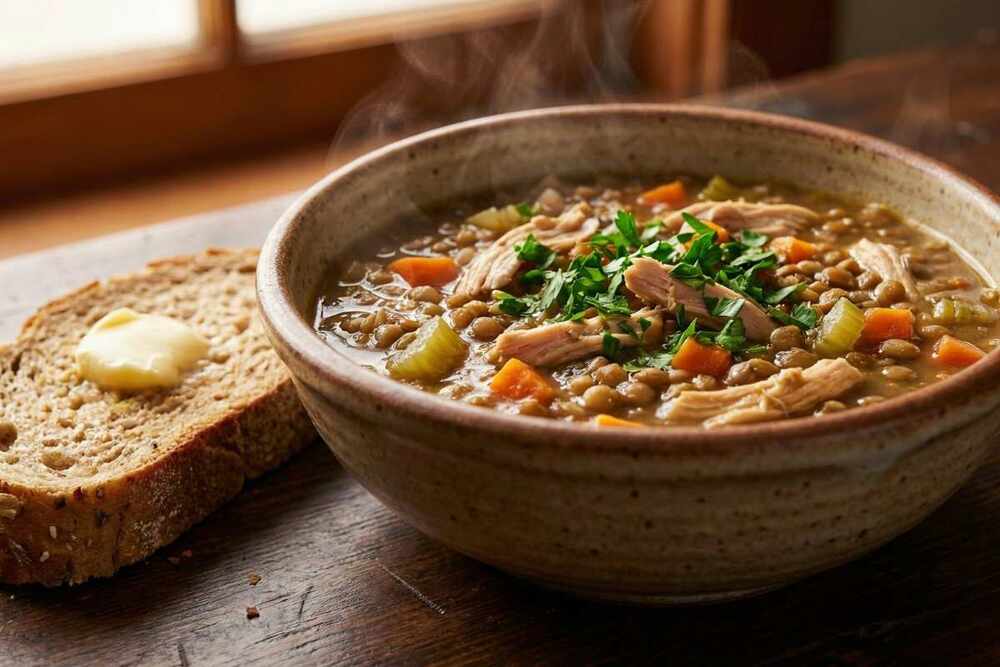
Ingredients (serves 6):
- 300g cooked chicken breast, shredded
- 2 cups dry lentils, rinsed
- 1 large onion, diced
- 3 carrots, diced
- 3 celery stalks, diced
- 4 cloves garlic, minced
- 8 cups chicken broth (low-sodium)
- 2 bay leaves
- 1 teaspoon thyme
- 1 teaspoon cumin
- Salt and pepper to taste
- Fresh parsley for garnish
Instructions:
- In a large pot, sauté onion, carrots, and celery for 5 minutes
- Add garlic, cook 1 minute until fragrant
- Add lentils, chicken broth, bay leaves, thyme, and cumin
- Bring to boil, then reduce to simmer for 25-30 minutes until lentils are tender
- Stir in shredded chicken, cook 5 more minutes
- Season with salt and pepper
- Remove bay leaves, garnish with parsley
Nutrition (per serving):
- Calories: 340
- Protein: 49g
- Carbs: 38g
- Fat: 3g
Pro Tip: Freeze individual portions in containers. Thaw overnight, reheat at work.
High-Protein Chicken Wrap
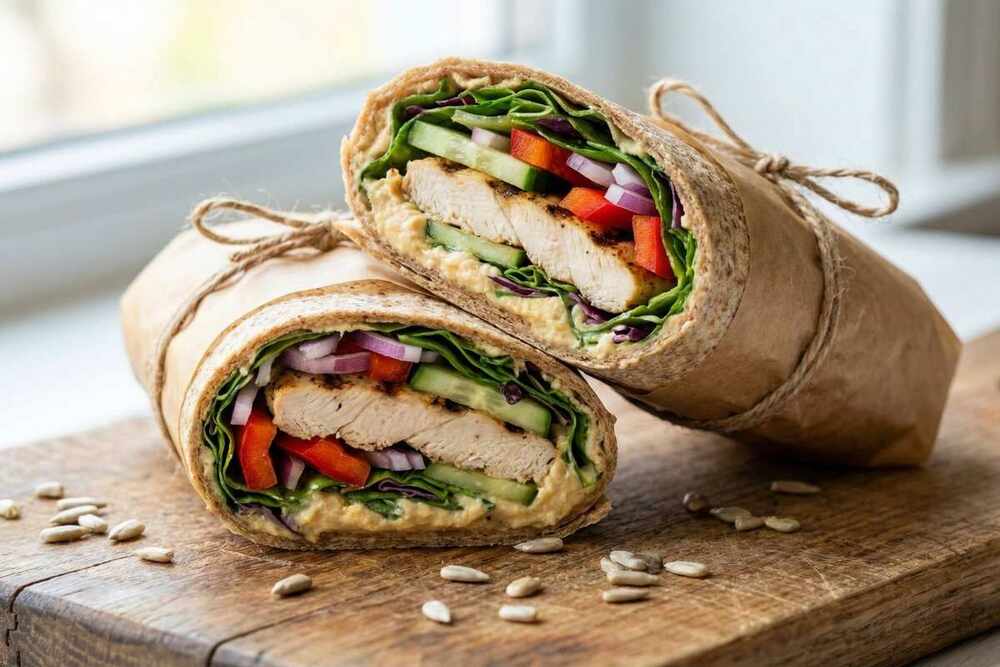
Ingredients (makes 2):
- 200g grilled chicken breast, sliced
- 2 large whole wheat tortillas
- ½ cup hummus
- 2 cups mixed greens
- ½ cucumber, julienned
- ½ red bell pepper, sliced
- ¼ red onion, thinly sliced
- 2 tablespoons sunflower seeds
- 2 tablespoons balsamic vinegar
Instructions:
- Spread ¼ cup hummus on each tortilla
- Layer greens, chicken, cucumber, bell pepper, and onion
- Drizzle with balsamic vinegar
- Sprinkle sunflower seeds
- Fold in sides, roll tightly from bottom
- Slice in half diagonally
- Wrap in parchment paper or foil if taking to go
Nutrition (per wrap):
- Calories: 450
- Protein: 42g
- Carbs: 45g
- Fat: 12g
Pro Tip: Pat vegetables dry with paper towels before assembling to prevent soggy wraps.
30g Protein Dinner Ideas
Salmon & Sweet Potato
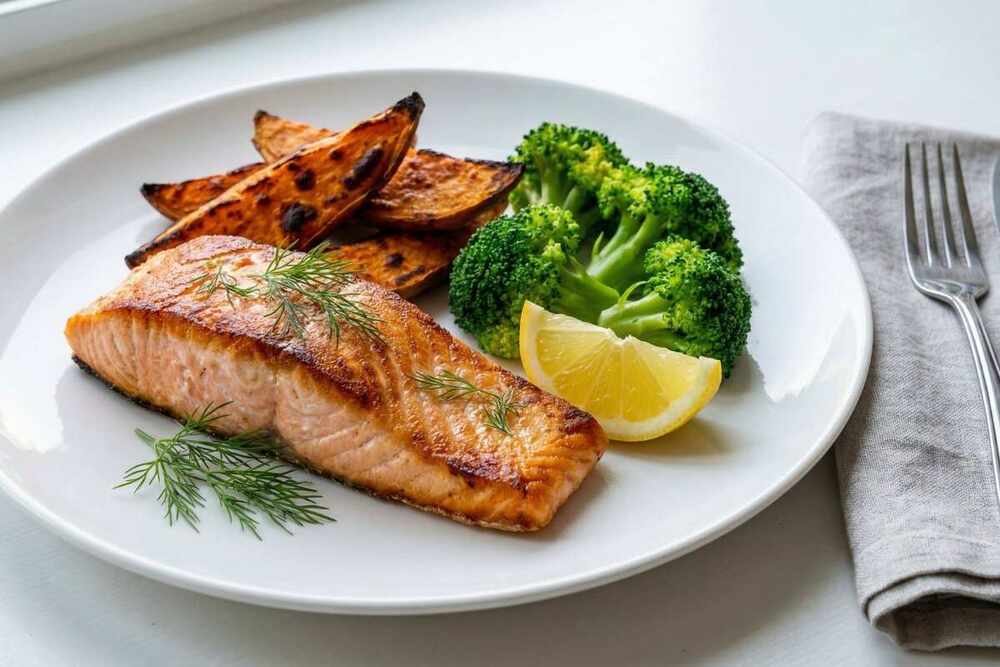
Ingredients (serves 2):
- 2 salmon fillets (200g each)
- 2 medium sweet potatoes
- 3 cups broccoli florets
- 3 tablespoons olive oil, divided
- 3 cloves garlic, minced
- 1 lemon
- Fresh dill
- Salt and black pepper
- Paprika
Instructions:
- Preheat oven to 400°F (200°C)
- Pierce sweet potatoes with fork, microwave for 5 minutes to partially cook
- Cut sweet potatoes into wedges, toss with 1 tablespoon olive oil, salt, and paprika
- Arrange on one side of baking sheet
- Season salmon with salt, pepper, minced garlic, and squeeze of lemon
- Place salmon on other side of baking sheet, drizzle with 1 tablespoon olive oil
- Bake for 12-15 minutes until salmon flakes easily
- Meanwhile, steam broccoli for 5 minutes, toss with remaining olive oil
- Serve salmon with lemon wedges and fresh dill
Nutrition (per serving):
- Calories: 580
- Protein: 52g
- Carbs: 42g
- Fat: 22g
Pro Tip: Check salmon at 12 minutes—it should be slightly translucent in the center for medium doneness.
Beef Stir-Fry
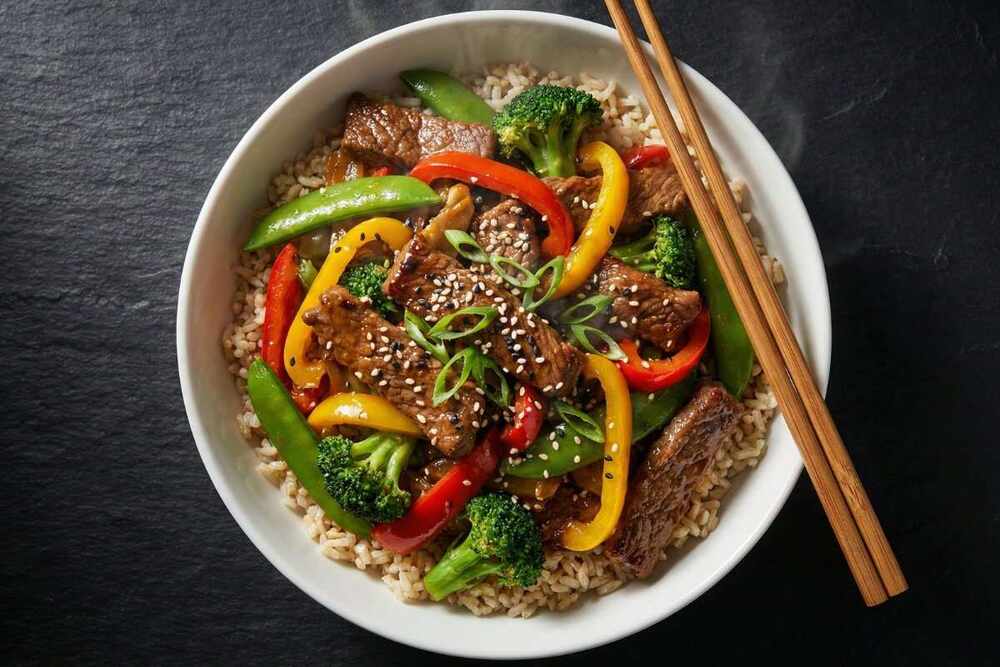
Ingredients (serves 2):
- 300g lean beef sirloin, thinly sliced
- 3 cups stir-fry vegetables (bell peppers, snap peas, broccoli)
- 1 cup cooked brown rice
- 3 tablespoons soy sauce (low-sodium)
- 2 tablespoons oyster sauce
- 1 tablespoon sesame oil
- 3 cloves garlic, minced
- 1 tablespoon fresh ginger, grated
- 1 tablespoon cornstarch
- 2 tablespoons water
- 1 tablespoon sesame seeds
- 2 green onions, sliced
Instructions:
- Mix soy sauce, oyster sauce, cornstarch, and water in a small bowl
- Heat sesame oil in a large wok or skillet over high heat
- Add beef in a single layer, cook 2 minutes without stirring
- Flip beef, cook 1 more minute, remove to plate
- Add garlic and ginger, cook 30 seconds
- Add vegetables, stir-fry 3-4 minutes until crisp-tender
- Return beef to pan, add sauce mixture
- Toss everything for 1-2 minutes until sauce thickens
- Serve over brown rice, garnish with sesame seeds and green onions
Nutrition (per serving):
- Calories: 520
- Protein: 41g
- Carbs: 48g
- Fat: 16g
Pro Tip: Freeze beef for 15 minutes before slicing—it’s much easier to cut thin strips.
For more quick dinners, see these 30-minute high-protein dinners.
Turkey Meatballs with Pasta
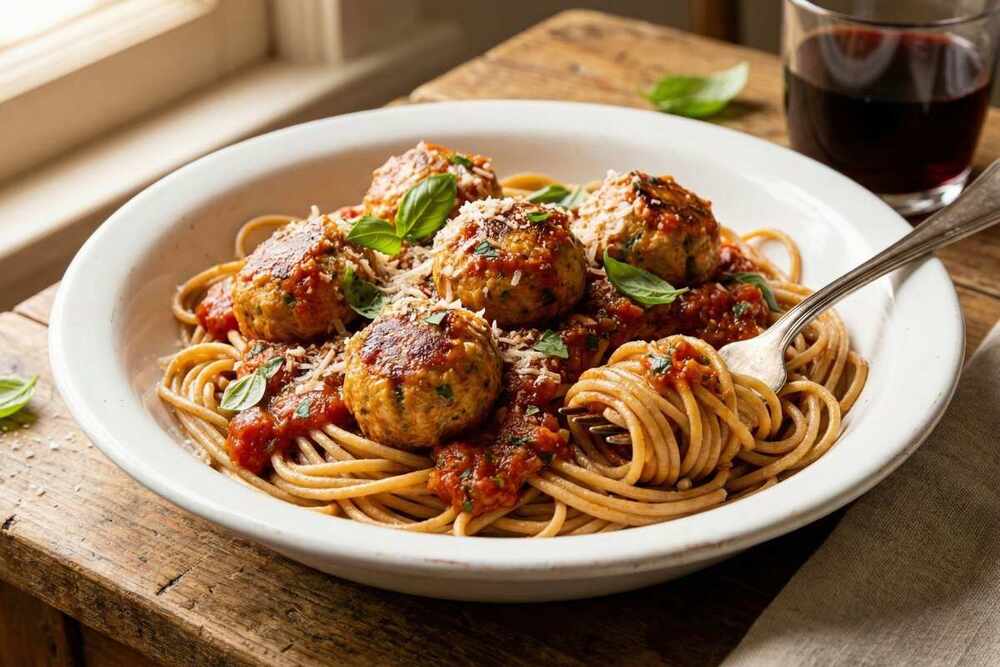
Ingredients (serves 4):
For meatballs:
- 600g ground turkey (93% lean)
- 1 egg
- ½ cup breadcrumbs
- ¼ cup grated Parmesan
- 3 cloves garlic, minced
- 2 tablespoons fresh parsley, chopped
- 1 teaspoon Italian seasoning
- Salt and pepper
For serving:
- 400g whole wheat spaghetti
- 3 cups marinara sauce (low-sugar)
- Fresh basil
- Extra Parmesan for topping
Instructions:
- Preheat oven to 400°F (200°C), line baking sheet with parchment
- Mix all meatball ingredients in a large bowl until just combined
- Form into 20 meatballs (about 1.5 tablespoons each)
- Arrange on baking sheet, bake 18-22 minutes until cooked through
- Meanwhile, cook pasta according to package directions
- Heat marinara sauce in large pan
- Add cooked meatballs to sauce, simmer 5 minutes
- Toss with pasta or serve meatballs and sauce over pasta
- Garnish with fresh basil and Parmesan
Nutrition (per serving, 5 meatballs + pasta):
- Calories: 560
- Protein: 47g
- Carbs: 68g
- Fat: 12g
Pro Tip: Double the recipe, freeze unbaked meatballs on a tray, then transfer to freezer bags once solid.
Lemon Garlic Chicken Thighs
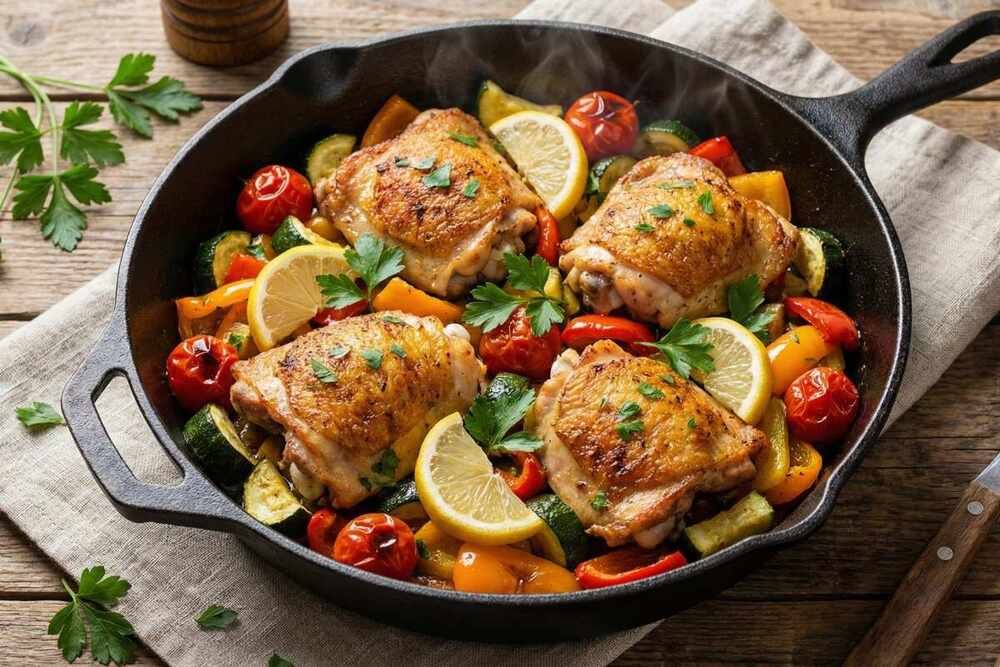
Ingredients (serves 4):
- 8 boneless, skinless chicken thighs (600g)
- 4 cloves garlic, minced
- 2 lemons (juice and zest)
- 3 tablespoons olive oil
- 2 teaspoons dried oregano
- 1 teaspoon paprika
- Salt and black pepper
- Fresh parsley
- Serve with: roasted vegetables or quinoa
Instructions:
- Mix garlic, lemon juice, lemon zest, olive oil, oregano, paprika, salt, and pepper
- Marinate chicken for at least 15 minutes (or up to 24 hours)
- Heat oven-safe skillet over medium-high heat
- Sear chicken 3-4 minutes per side until golden
- Transfer skillet to 375°F (190°C) oven
- Bake 15-20 minutes until internal temp reaches 165°F (74°C)
- Let rest 5 minutes, garnish with fresh parsley
- Serve with roasted vegetables or quinoa
Nutrition (per serving, 2 thighs):
- Calories: 340
- Protein: 38g
- Carbs: 3g
- Fat: 18g
Pro Tip: Chicken thighs stay juicy even if slightly overcooked—perfect for beginners.
High-Protein Snacks (15-20g)
Quick protein boosts between meals:
- Greek yogurt + almonds: 1 cup (15g) + ¼ cup (8g) = 23g
- Protein shake: 1 scoop (25g) + 1 cup milk (8g) = 33g
- Cottage cheese bowl: 1 cup (28g) + fruit = 28g
- Hard-boiled eggs: 4 eggs = 24g
Browse these high-protein healthy snack ideas for more options.
Common Mistakes to Avoid
Mistake 1: Too Little Protein at Breakfast
Most people eat 5-10g at breakfast, then wonder why they’re starving by 10 AM.
The fix: Aim for 25-35g at breakfast. Research from the International Journal of Obesity shows high-protein breakfasts reduce hunger all day.
Mistake 2: Relying Only on Supplements
Protein powder shouldn’t be your primary source.
The fix: One shake daily maximum. Get the rest from real food.
Mistake 3: Ignoring Plant Proteins
You don’t need meat at every meal.
The fix: Lentils (18g) + tempeh (19g) + quinoa (8g) = 30g+ easily.
Mistake 4: Not Spreading Protein Throughout the Day
Eating 80g at dinner doesn’t work. Your body can only use 25-40g per meal.
The fix: Distribute evenly—25-35g per meal, 3-4 times daily.
Mistake 5: Forgetting Complete vs. Incomplete Proteins
Animal proteins are “complete.” Most plant proteins need combining.
The fix: If eating mostly plants, combine sources (rice + beans, hummus + bread).
Meal Prep Strategy (90 Minutes Sunday)
My system for effortless high-protein eating:
Protein Prep (30 min):
- Grill 6-8 chicken breasts
- Hard-boil 12 eggs
- Cook 3 cups dry lentils
- Form 30-40 turkey meatballs
Carbs & Vegetables (30 min):
- Cook 4 cups quinoa or brown rice
- Roast 3 sheet pans mixed vegetables
- Prep salad greens
Assembly (20 min):
- Portion proteins into 150g servings
- Combine with grains/vegetables
- Label with date and protein grams
Result: 12-14 meals ready to grab.
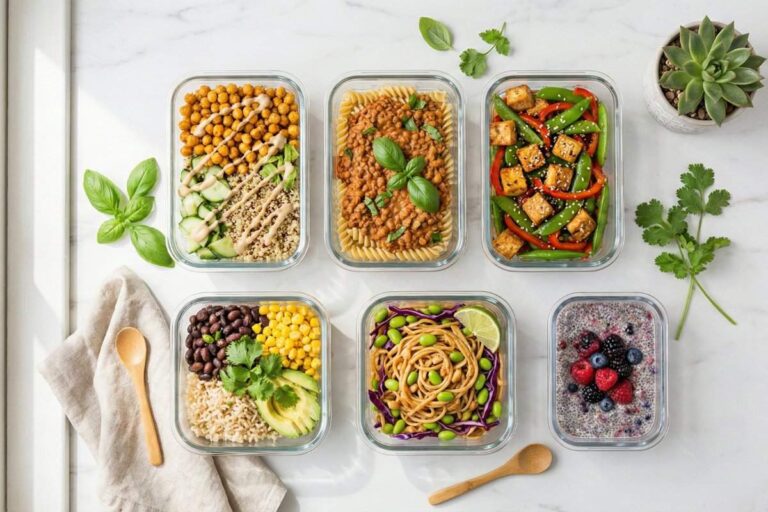
For the complete system, see this high-protein meal prep guide.
Budget-Friendly High Protein Foods
Best value proteins (cost per 30g):
- Eggs: $1.50 (5 eggs)
- Canned tuna: $1.80 (1 can)
- Dried lentils: $0.60 (2 cups cooked)
- Greek yogurt: $2.00 (2 cups store brand)
- Frozen chicken breast: $2.50 (150g)
- Canned beans: $1.20 (1½ cups)
- Peanut butter: $1.80 (4 tbsp)
Money-saving tip: Buy chicken on sale ($1.99/lb), portion, freeze. My protein costs run $4-6 daily.
Protein for Different Goals
For Weight Loss
- Target: 1.6-2.2g per kg body weight
- Strategy: 30-35g per meal, prioritize lean proteins
- Why: High protein reduces hunger, preserves muscle
See these low-calorie high-protein meals for more ideas.
For Muscle Building
- Target: 1.6-2.2g per kg body weight
- Strategy: 30-40g per meal, eat within 1-2 hours post-workout
- Why: Provides building blocks for growth
For Healthy Aging
- Target: 1.0-1.2g per kg (minimum)
- Strategy: 25-30g per meal
- Why: Preserves muscle mass and bone density
People over 50 need MORE protein than younger adults.
Quick Tips
Choosing Protein
- Look for lean cuts to reduce calories
- Wild-caught fish when possible
- Organic, grass-fed if budget allows
- Check sodium in canned/packaged foods
Storing Protein
- Refrigerate at 40°F or below
- Freeze extras in portion sizes
- Label with date and protein content
- Use within 3-4 days when refrigerated
Boosting Any Meal
Keep these on hand for instant 5-10g boosts:
- Hemp seeds (3 tbsp = 10g)
- Canned tuna (half can = 18g)
- Greek yogurt (½ cup = 12g)
- Cottage cheese (½ cup = 14g)
- Protein powder (½ scoop = 12g)
FAQ
Can you eat too much protein?
For healthy people, up to 2.2g per kg is safe. Drink 3-4 liters of water daily with high protein intake.
Do I need protein powder?
No. You can hit goals with whole foods alone. I use it only on busy mornings.
Is plant protein as good as animal protein?
Yes, if you eat enough and combine sources for complete amino acids. You might need slightly more since digestibility is sometimes lower.
How do I know if I’m eating enough protein?
Signs you’re not:
- Constant hunger between meals
- Muscle loss despite exercise
- Weak/brittle nails
- Thinning hair
Solution: Track for a week using MyFitnessPal.
What’s the best protein for weight loss?
Lean proteins work best—chicken breast, fish, egg whites, Greek yogurt, cottage cheese. They deliver maximum protein with minimum calories.
The Bottom Line
Getting 30g of protein per meal isn’t complicated. After figuring this out over the years, here’s my simple system:
The basics:
- Include a palm-sized protein portion at every meal
- Keep high-protein snacks on hand
- Meal prep protein in bulk on Sundays
- Track intake for one week to establish baseline
Start simple:
- Pick 5-7 high protein foods you enjoy
- Build meals around them
- Aim for 25-35g at each main meal
- Adjust based on how you feel
This week:
- Calculate your protein target (body weight × 1.6g)
- Track what you’re eating for 3 days
- Try 2-3 meal ideas from this guide
- Notice your energy and hunger levels
Remember: Consistency beats perfection. Get close most of the time and you’ll see results.
More High-Protein Resources
Breakfast:
Meal Prep:
More Recipes:
- High-Protein Chicken and Rice
- High-Protein Dessert Recipes
- High-Protein Parfait Recipes
- Quick Healthy Dinners for Weight Loss
Disclaimer: This article is for informational purposes only and shares personal experiences. I’m not a registered dietitian or doctor. Please consult with a healthcare provider before making significant dietary changes, especially if you have kidney disease, liver disease, or other underlying health conditions.
Last Updated: January 24, 2026